
100 Hours Kundalini Yoga Program in Rishikesh

Course Highlights

$449

No Food & Accommodation

  • 12 Days Program
  • Certification-Adi Yoga Ashram
  • Study Material Included

$649

Twin Shared Room

  • 12 Days Program
  • Certification-Adi Yoga Ashram
  • Study Material Included
  • 3 Yogic Meals

$849

Private Room

  • 12 Days Program
  • Certification-Adi Yoga Ashram
  • Study Material Included
  • 3 Yogic Meals

Our 12-day, 100 Hour Kundalini Program is designed for students who want to learn the foundations of traditional Kundalini Yoga, but don't have time to attend the full yoga teacher training program due to a busy schedule. At Adi Yoga Ashram, during this program student get to learn about all the important subjects such as Hatha Yoga, Kundalini theory and practices, pranayama, mudras, bandhas, and more. The course is perfectly suitable for beginners and gives them a strong base for personal practice as well as further studies in Kundalini Yoga.

During this course, students attend and practice regular asana, pranayama, kriyas, and meditation to gain a deeper understanding of this ancient path while building a strong foundation for their future study. Kundalini Yoga is one of the oldest ancient spiritual practices that yogis have been using to awaken the dormant spiritual energy, which resides at the base of the spine and holds the potential to awaken higher states of consciousness. For a long time, yogis and spiritual seekers have practised Kundalini Yoga as a means of inner transformation, self-realisation, and spiritual growth. This life force is mentioned in traditional texts as a serpent coiled three and a half times at the base of the spine, waiting to be awakened through disciplined practice and sincere sadhana.

And throughout this 100 Hour Kundalini Program, we teach students the existence, functions, and traditional understanding of this energy. This course provides a practical introduction to the methods which yogis used to awaken their Kundalini. By developing awareness of breath, energy, and consciousness, students begin to appreciate the transformative potential of this ancient system.

At Adi Yoga Ashram, we provide a environment in which a students can grow and deepen their understanding of Kundalini energy and the subtle body. We have designed the practices carefully and in structured way such as guided meditations, students are introduced to the concepts of chakras, nadis, prana, mantra etc. The goal in this program is not to simply just learn the techniques but to gain greater awareness and establish a strong personal practice.
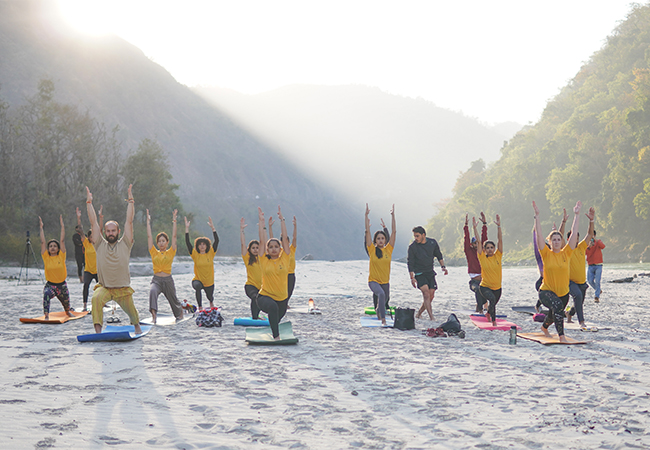
Our experienced teachers guide students through the traditional teachings of Kundalini Tantra in a sincere and grounded way, sharing the practices with respect for the lineage and wisdom from which they come. During this course, students also learn about the chakra system and how specific yoga asanas, pranayama techniques, beej mantras, kriyas are was traditionally used to activate specific chakras to find the energetic balance within.

The teachings at Adi Yoga Ashram are rooted in the traditional Kundalini Tantra system, a path that has been preserved through scriptures, oral teachings, and generations of dedicated practitioners. Kundalini tradition views a person's spiritual growth as a gradual and continous process that require discipline, mental clarity, and awareness. In the traditional Kundalini Tantra approach, emphasis is placed on understanding and cultivating the dormant Kundalini energy through systematic practice. Students learn how the different components of yoga work together to prepare the body and mind for deeper spiritual experiences. Rather than focusing on dramatic experiences that sold as kundlaini awekaning, the training encourages consistency, patience, self-observation, and disciplined practice.

The Kundalini Tantra tradition also teaches us that your personal transformation is strongly connected with a deeper understanding of life and our connection with the world around us. By dedicated study and practice, students are encouraged to find balance, awareness, compassion, and a greater sense of connection with the universal energy that underlies all existence. When the program finishes, students leave with a clearer understanding of what Kundalini Yoga and its tradition is, and also end up with a stronger personal practice with deeper appreciation for one of the most profound traditions within the yogic system.

What does and doesn't the course fee include?

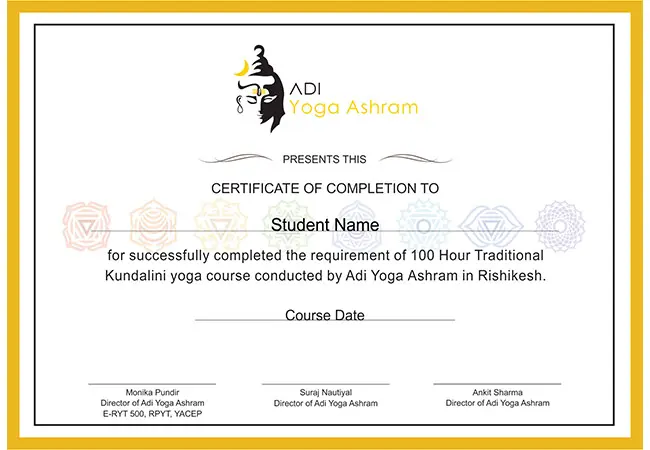
Sample Certificate

Sample Certificate

Course Syllabus - 100 Hours Traditional Kundalini Yoga Program

Our 100 Hour Kundalini syllabus combines foundational yogic subjects with the core practices of Kundalini Yoga. During your 12 days at the school, you will study anatomy, Hatha Yoga, pranayama, and yoga philosophy while also learning Kundalini kriyas, chakras, mudras, bandhas, meditation, and the traditional teachings behind these practices.

Kundalini Modules

Kundalini Kriya and Practice

Kundalini Kriyas are precise, traditional yogic sequences designed to awaken dormant spiritual energy at the base of the spine and guide it upward through the central energetic channel. In this class you will learn about sequences dedicated to specific chakras and how to perform them safely.

Foundational Kriya Practices

  • Introduction to traditional Kundalini kriya practices and their energetic structural design
  • Breath and movement coordination within active kriya
  • Dynamic movement sequences
  • Foundational cleansing and preparatory kriyas to purify the energetic pathways

Chakra Alignment

  • Introduction to the framework, locations, and functions of the seven major chakras
  • Breaking down foundational warrior and balancing postures for focus
  • Chakra visualization and specific focal concentration techniques
  • Seed mantras (Bija mantras)

Bandha, Mudra & Safe Practice Guidelines

  • Energetic Seals, Basic mudras (hand gestures) and Bandhas (body locks)
  • Safety and Contraindications
Traditional Kundalini Philosophy

Kundalini philosophy give us a deeper understanding of how this traditional yogic system describes human consciousness, subtle energy channels, and the process of spiritual awakening. In this class students explore the symbolic and philosophical foundations of Kundalini Yoga while learning how disciplined practice is traditionally used to raise greater awareness and inner transformation.

Tantric Roots

  • Historical Linages, origins of Kundalini and Tantra traditions
  • Nature of the mind and ego in yoga
  • Attachment, human suffering, and ultimate liberation

Sacred Symbolism

  • Symbolic meaning and energetic dynamics of Shiva (consciousness) and Shakti (primordial energy)
  • Symbolism of the chakras, nadis, and prana
  • Methods of awakening
  • common obstacles on the spiritual path
Mudras & Bandhas

In classical yoga, mudras and bandhas are practices used to work with prana and develop greater awareness of the subtle body. During your 12 days on campus, you will learn the basic mudras and bandhas used in Kundalini Yoga, their traditional purpose, and how they are combined with pranayama and other yogic practices.

Foundations

  • Introduction to mudras and bandhas,
  • Overview of the distinct types and categories,
  • Contraindications & benefits

Pranic Element

  • Panch Prana Mudras to regulate the five primary energetic currents
  • Pancha Tattva
  • 3 Bandhas
  • common obstacles on the spiritual path

Hatha Yoga and Practices

Mantra Chanting

Mantra chanting is not taught as an isolated academic subject; instead, it is integrated naturally into our daily schedule and various classes to help focus the mind, achieve mental peace,

  • Correct pronunciation and breath coordination through traditional opening, closing, and universal peace mantras.
  • Core chants—including the Patanjali Invocation, Gayatri Mantra, Maha Mrityunjaya Mantra, and Aum Namah Shivaya, as they arise naturally in your classes
Classical Hatha Yoga

Our 100 Hour students practice alongside the 200 Hour batch and are introduced to the traditional principles of Hatha Yoga, where the focus is placed on steadiness, breath awareness, and mindful posture holding.

Yogic Foundations & Core Practice Flow

  • Core introduction to the traditional, classical principles of Hatha Yoga
  • Link between breath, steady posture, and inward awareness
  • Foundational Surya Namaskar (Sun Salutation) and Chandra Namaskar (Moon Salutation)
  • Therapeutic preparatory series from the Pawanmuktasana groups
  • Fundamental standing, sitting, and supine sequencing flows

Asana Structural Breakdown

  • Grounding & Stability: Standing postures for building lower-body strength
  • Spinal Mobility & Flexion: Foundational forward bending, twisting, and gentle backbend postures
  • Pelvic Opening & Knee Health: Fundamental hip-opening techniques and kneeling positions
  • Balance & Recovery: Balancing shapes and introductory inversions
Shatkarmas for Purification

Classical detoxification methods from hatha texts, designed to clear internal blockages, eliminate toxins, and balance the vata, pitta and kapha.

  • Theoretical understanding of traditional internal purification practices
  • Jala Neti: Practical experience with nasal irrigation using warm saline water to clear the sinuses
  • Sutra Neti: Step-by-step guidance on nasal cleansing utilizing a specialized rubber catheter
Traditional Pranayamas

During the first 12 days, students are introduced to the foundations of pranayama through a gradual and systematic approach. The focus is on breath awareness, healthy breathing mechanics, and simple classical techniques, helping students build a strong foundation before progressing to advanced practices.

Pranic Theory & Breath Anatomy

  • Understanding of breath control (Pranayama) in classical yoga
  • Five major pranas and their vital energetic functions
  • Energy channels: Ida, Pingala, and Sushumna Nadis
  • Basic respiratory anatomy, diaphragmatic function, and the physiological nasal cycle

Classical Techniques

  • Progressing in foundational breathing
  • Energy Control: Surya Bhedana (heating), Chandra Bhedana (cooling)
  • Kapalbhati & Bhastrika cleansing mechanics
Meditation Techniques

During the program you will explore a diverse range of classical, dynamic, and mindfulness-based techniques, allowing you to discover the specific practices that best support your personal journey.

Foundations, Postures & Mudras

  • Foundational introduction to meditation, inner awareness, and its historical origins
  • Understanding the role of meditation (Dhyana) within the traditional Eight Limbs of Yoga
  • Practical guidance on the do's and don'ts of establishing a sustainable daily practice
  • Introduction to sacred hand gestures

Practical Techniques

  • Breath & Sound Stabilization: breath awareness meditation and resonant AUM chanting
  • Mantra:Japa & Ajapa
  • Visual & Sensory Focused:Trataka & Drawing Meditation
  • Somatic Practice:31-point awareness, walking meditation,active dynamic meditation

Human Science & Biomechanics

Practical Yoga Anatomy & Physiology

In this class you will study how the human body moves, breathes, and adapts under stress, giving you the practical scientific tools needed to keep your personal practice entirely safe, sustainable, and injury-free.

Biomechanics & Structural Alignment

  • Introduction to foundational anatomical planes, directional movements, and joint mobility in yoga
  • Relationship between muscle engagement, posture, and conscious movement
  • Function, and natural curves of the spine,
  • Pelvic stability and knee movement mechanics
  • Tendons & ligaments

Physiology & Internal Systems

  • Respiratory Mechanics
  • Nervous System

Posture Labs

  • Alignment awareness
  • Muscle engagement versus safe passive stretching
  • Injury prevention & Modifications

Yoga Humanities & Philosophy

Yogic Philosophy

Yoga philosophy provides the vital intellectual and spiritual bedrock for your daily practice. In this class you will learn the traditional concepts of self-discipline, inner growth, and conscious living.

Foundations of Yogic Wisdom & Lifestyle

  • Introduction to Sanatana Dharma, classical yogic traditions, and foundational scriptures
  • Spiritual goals of classical yoga according to the Yoga Sutras and the Bhagavad Gita
  • Yogic Life Stages
  • The Four Life Goals
  • Raja Yoga & The Eight Limbs

Traditional Paths of Yoga

  • Karma, janana, Bhakti, Raja & Hatha, Bhakti Yoga

Excursion Included In This Course

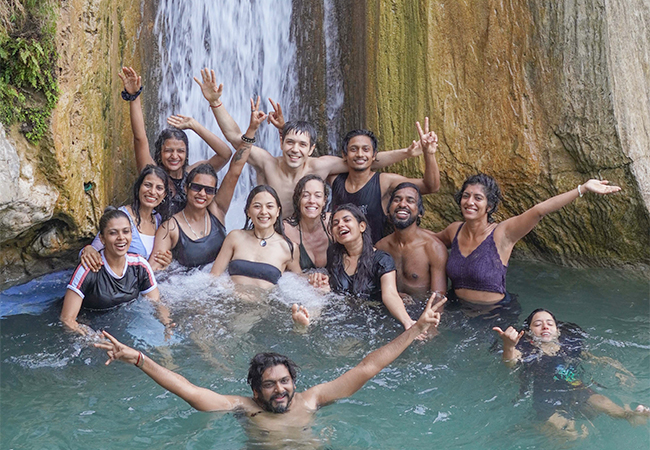
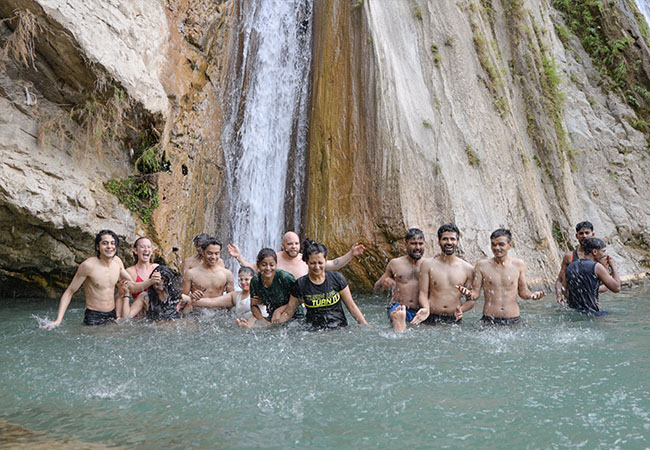
To help students experience the spiritual atmosphere of Rishikesh beyond the classroom, the 100 Hour Kundalini Program includes one or two guided excursions during the training (depending on the month). These may include visits to Kunjapuri Temple, Vashishta Cave, waterfalls, river beaches, and other nearby locations connected with yoga and meditation.

Why Choose Adi Yoga Ashram for Your First Yoga Course?

Adi Yoga Ashram is an esteemed and time-honored Yoga School located in Rishikesh, the yoga capital of the world. Here are some reasons why we stands out as the preferred choice for yoga enthusiasts:

Adi Yoga Ashram
  • Reputed and Traditional: Adi Yoga Ashram is renowned as one of the most respected and traditional Yoga Schools in Rishikesh. Its rich heritage and commitment to authentic yoga teachings make it a trusted institution.
  • Convenient Location: Nestled in an idyllic setting near the vibrant market area of Rishikesh, Adi Yoga Ashram offers a prime location that is easily accessible. You can explore the local markets, indulge in traditional cuisine, and experience the lively atmosphere of the city, all within a short walk from the ashram.
  • Experienced Yoga Teachers: With a team of 30+ experienced yoga teachers specializing in various subjects, Adi Yoga Ashram ensures high-quality instruction and personalized guidance. Their expertise and dedication contribute to a transformative learning experience.
  • Global Community: Adi Yoga Ashram welcomes students from all corners of the world, fostering a diverse and inclusive community. Interacting with fellow yoga enthusiasts from different cultures enhances the overall experience and promotes cross-cultural understanding.
  • Proven Track Record: Over the years, hundreds of yoga students have been trained in various styles at Adi Yoga Ashram, establishing its reputation as a trusted institution for comprehensive yoga education.

Accommodation & Premises

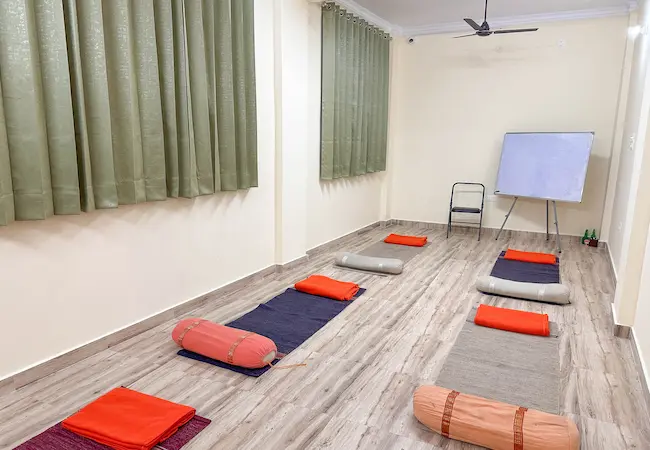
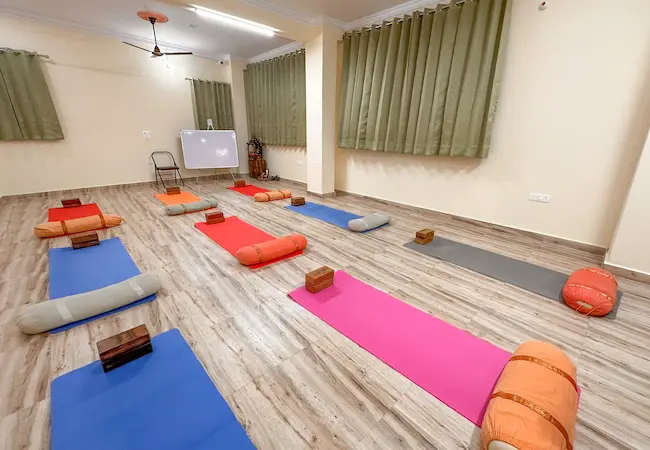
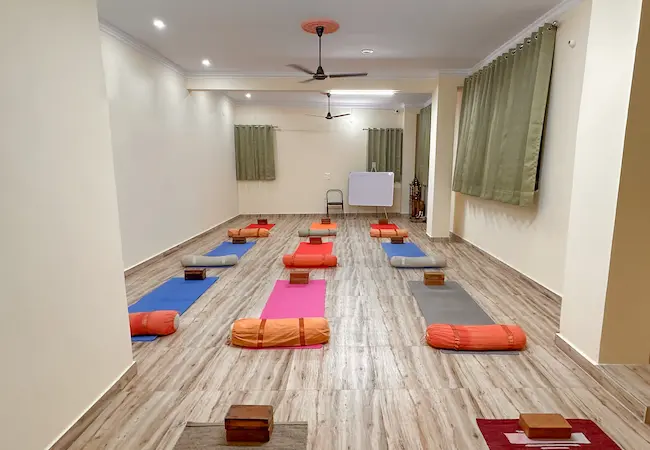
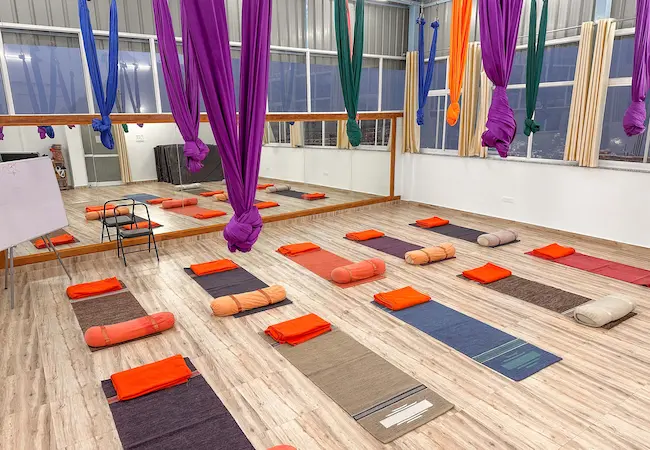
Clean and comfortable accommodation comprises of single private rooms and double shared & Dorm rooms with attached washrooms.

  • Room Size: 11 × 11 ft to 12 × 12 ft (≈ 12–13 m²)
  • Bathroom: Attached, 3 × 6 ft to 5 × 6 ft with (electric water heater), western toilet, and standard shower fittings.
  • Beds: Private (6 x 6 ft) ,Twin Shared (2 × single 6 × 3 ft); Dorm (2 Bunk beds 6 x 3) foam mattresses medium firmness, polyester fiberfill Pillow medium firmness
  • Storage: One Cupboard/Room (6′10″ × 3″) shared by students
  • Amenities: Ceiling fan / A C (as available), Wi-Fi ~40–60 Mbps, desk,housekeeping weekly,linen change every 3rd day

*Layouts may vary slightly between rooms in the same category.

Meals

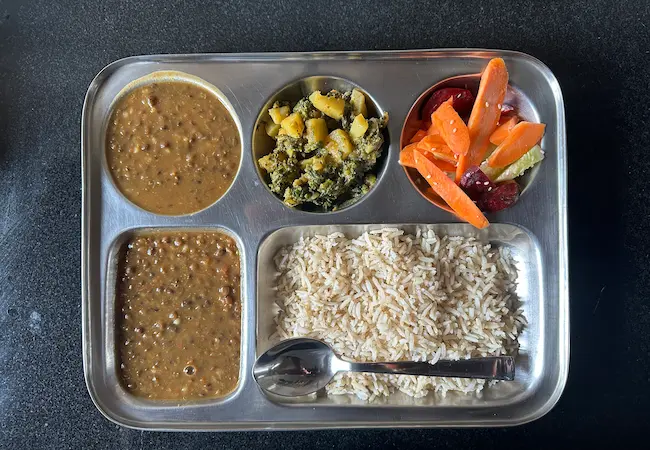
Three vegetarian nutritious, healthy and sattvic meal per day (Breakfast, Lunch and Dinner). Our simple yogic diet food is perfect for nourishing the mind, body and soul. Herbal teas are served twice a day.

  • Breakfast: includes oats, fruits, sprouts and dishes like poha, idli, or dosa, rolls etc.
  • Lunch: offers rice with lentils, seasonal vegetables, and salad.
  • Dinner: is light and comforting with soup , Chapati & Rice, lentils, Occasional sweets, herbal tea, and seasonal vegetables.
  • Highlight: No onion, no garlic, Prepared with minimal oil, Balanced with protein, carbs, and micronutrients

" यत् भावो – तत् भवति "

"You become what you believe"


Sanskrit Proverb

Course Dates - 100 Hours Kundalini Yoga Program

Note:- During major holidays in India, such as Diwali, Holi, and Raksha Bandhan, please note that classes will not be conducted as per the regular schedule. Additionally, it is important to be aware that the graduation date for the course may be extended by a day to accommodate these holiday breaks.

Discount Offers: Take advantage of our offers! These discounts are designed to support your yoga journey and make your training more accessible. Please read the guidelines carefully to understand how and when each offer can be applied.

🎁 Early Bird

Book 20 days before & get 5% off your total fee (Everymonth for First 5 bookings).

🎁 Enroll Together (Friends Discount)

Sign up together with a friend and you both receive 8% off.

🎁 Birthday Month Discount

If your course falls in your birthday month, enjoy additional 2% off as our gift to you!.

🎁 Group Discount

Enroll as a group of 4 or more and get 10% off per person.

Yoga in India: A More Holistic Approach

India holds the distinction of being the birthplace of Yoga, with its origins dating back thousands of years. This ancient practice was developed by numerous revered monks and sages who sought to cultivate physical and mental well-being. Their profound desire for elevated meditation and ultimate attainment of Samadhi necessitated a fit and disease-free body. Yoga, when practiced optimally, not only promotes physical health but also preserves youthfulness. Therefore, it is worthwhile to explore why India surpasses Western countries as an exceptional destination for embracing Yoga.

Authentic Yoga Teachings

People travel to India to experience authentic yoga, as many of the most popular yoga styles originated there. These styles were developed by Indian yoga masters, and people can learn directly from them in India. Adi Yoga Ashram is a leading yoga teacher training school in Rishikesh that has been offering authentic yoga for over 30 years. This means that people can learn yoga in its original form, as it was practiced in India for centuries.

Philosophical Beliefs

In India Yoga is considered more than just a physical practice. It is a philosophy that encompasses the body, mind, and spirit. In India, yoga is not just a form of exercise, but a way of life. This is why yoga teacher training in India is so important. In addition to learning the physical postures, you will also learn about the philosophy of yoga and how to apply it to your own life. The benefits of yoga are many. It can help you improve your physical health, mental clarity, and emotional well-being. It can also help you connect with your inner self and find peace and harmony in your life.

Spiritual Environment

Yoga in India is often seen as a spiritual practice, while yoga in the West is often seen as a form of exercise or relaxation. As a result, the yoga environment in India is more spiritual and traditional, while the yoga environment in the West is more physical and fitness-oriented. In India, yoga is often practiced in ashrams, which are spiritual communities. This provides students with a unique opportunity to learn about yoga in a traditional setting. In the West, yoga is often practiced in studios or gyms. This can be a more convenient option, but it may not offer the same level of spiritual depth as practicing yoga in an ashram.

Answers of Most asked QUESTIONS

Frequent Asked Questions

The closest and most convenient airport for you is to fly to New-Delhi. If you are visiting India for the first time then it is better for you to take a flight to Dehradun (city nearby), and from Dehradun is a 30 min drive by car, so you save a hustle.

Yes, with advanced notice, we will gladly arrange transportation for you from the airport, bus station, or train station in India directly to our school in Rishikesh. Upon your arrival in Rishikesh, our team will be there to welcome you and provide directions for a short walk from the drop-off point to our school. We understand the importance of a smooth and convenient journey, and we are committed to ensuring that your arrival experience is hassle-free. Just let us know your travel details in advance, and we'll take care of the rest.

We understand that unforeseen circumstances may arise, and you may need to make changes to your booking. We strive to accommodate such situations to the best of our ability, depending on availability. Please inform us as soon as possible if you need to make any changes to your booking. We will do our utmost to assist you, keeping in mind the feasibility and any applicable terms and conditions.

December - January - February - are the coldest month, the temperature gets down to 15-26 C, and we do not provide room heaters, so if you are doing the course during December-early March we recommend you to bring warm clothes.

April to August - hot & rainy weather - light cotton clothes are recommended, as the temperature can get even to 40 degrees. September is the ending of the rainy season. Still if you coming during these month umbrella/raincoats are recommended.

October to March - weather in Rishikesh varies from pleasant to cold and woolen clothes, jackets etc. are recommended. The temperature is averagely around 32-33 C.

Rishikesh is known for its spiritual and peaceful atmosphere, and it is generally considered safe for women travelers. At Adi Yoga Ashram, we prioritize the safety and security of all our guests. We maintain a safe and supportive environment where women can feel comfortable and safe. However, it is always advisable to take general precautions, such as being aware of your surroundings and avoiding isolated areas at night.

Read more Faq's