
200 Hour Yoga Teacher Training Course in Rishikesh

Course Highlights

$499

Tuition Only
(Excludes Food & Accommodation)

  • 24 Days Program
  • Certification-Yoga Alliance
  • Study Material Included

$599

Quad Shared Dorm

  • 24 Days Program
  • Certification-Yoga Alliance
  • Study Material Included
  • 3 Yogic Meals

$849

Twin Shared Room

  • 24 Days Program
  • Certification-Yoga Alliance
  • Study Material Included
  • 3 Yogic Meals

$999

Private Room

  • 24 Days Program
  • Certification-Yoga Alliance
  • Study Material Included
  • 3 Yogic Meals

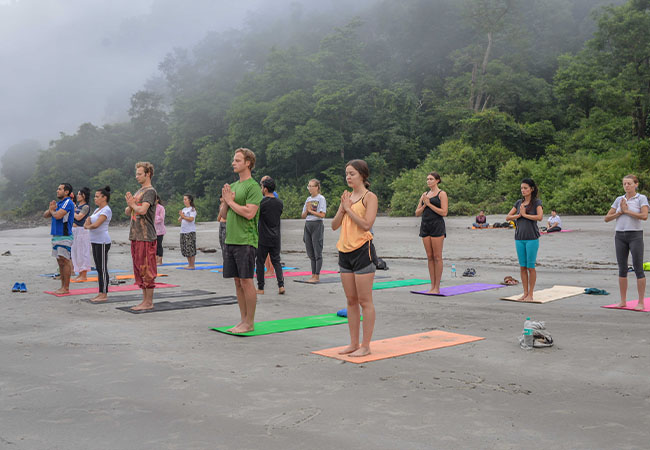
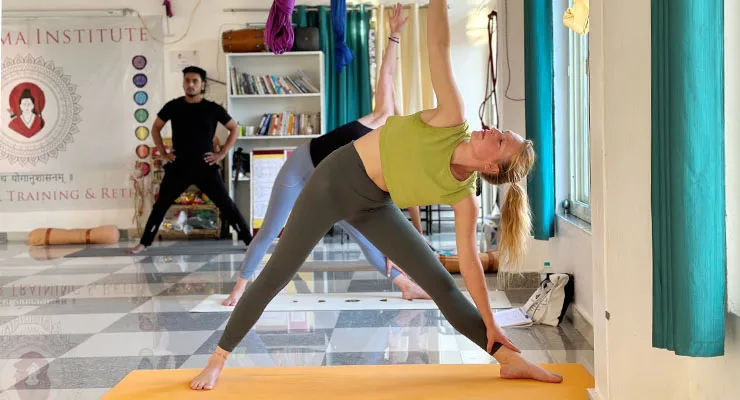
Learn the foundation of yoga with our 200 Hour Yoga Teacher Training course organised in the world’s yoga capital- Rishikesh, India. It is organised by Adi Yoga Ashram in Upper Tapovan, Rishikesh. Inviting to learn the foundation of yoga coming from the Himalayan tradition in a yogic community environment. This course is suitable for beginner to intermediate level students. Here, the school teaches traditional Hatha and Ashtanga-Vinyasa yoga in a serene and peaceful environment surrounded by the Himalayan Shivalik ranges. Switch yourself from the daily life chaos and start a journey towards the inner soul by connecting with the sacred yogic practices. Implementing yogic traditional practices in everyday life and uplifting the conscious energy collectively. This course is thoughtfully designed, which also follows Yoga Alliance guidelines.

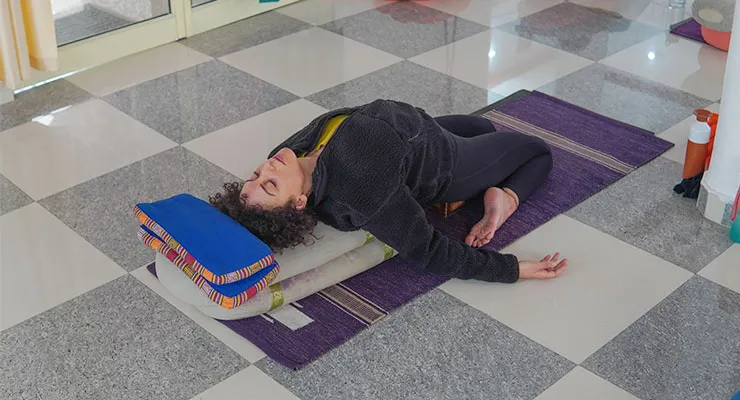
Adi Yoga Ashram offers a combination of yoga practices like Traditional Hatha, Ashtanga-Vinyasa, Vinyasa Flow, Restorative yoga, Yin Yoga, and Aerial Yoga for the overall growth of a practitioner. The class begins early in the dawn with fresh air and the chirping of birds. Naturally, the vibration of Rishikesh is high and pure. The flow of Mother Ganga uplifts its energy, which has attracted the yogis and seekers from ancient times, and its blessings help new seekers with their practices, sadhanas and uplifting their experiences.

As a Yoga Ashram, we assist students from time to time in and out of the class. The energy of the town and Mother Ganga enhances the experience and makes it a solace home to dive into the ancient yoga practice. The 200 Hour Yoga Teacher Training Course in India is well developed to introduce traditional Hatha, Ashtanga-Vinyasa, Vinyasa, Restorative Yoga, Yin Yoga, and Aerial Yoga practice for physical growth. Pranayama, Mudra, Bandha, Shatkarma for energy growth, Meditation, Mantra Chanting, Yog Nidra and Yoga Philosophy for mental growth. Hands-on adjustment, Alignment Techniques, and teaching methodology are also part of ethics and yogic Anatomy and Physiology to understand the physical body in the most easiest way. After the successful completion of the 200 Hour Yoga Teacher Training, students get a Yoga Alliance-affiliated certificate.
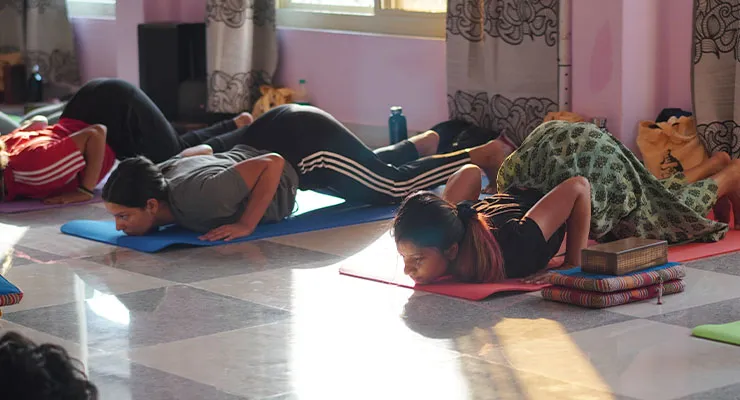
Join a 200 Hour Yoga Teacher Training in Rishikesh, India and begin ancient yoga practice in a peaceful Ashram surrounded by lush green Shivalik Himalayas. This Yoga Alliance certified course is taught by highly experienced traditional yoga teachers with modern techniques, which helps grow in all aspects, which also makes us one of the kind of a traditional yoga school in the world.

200 Hour Teacher Training course helps you to build a solid foundation of yoga and grow as a practitioner and then a teacher. Designed to nurture future instructors, this course emphasises both personal and professional growth. This course is recognised by Yoga Alliance, and this helps students in their personal journey and professionally forward the knowledge to their own students. Our Yoga Alliance course is designed to boost and inspire the future yoga teachers to deliver correct and authentic knowledge. Our class size is small, which helps in personalized attention, care and uplifting their progress as per their own pace.

By enrolling in this training, you will gain access to several key benefits:

  • Get certified as a yoga teacher by one of the leading yoga schools in Rishikesh.
  • Improve your knowledge of yoga asanas, breathing techniques, meditation, and yoga philosophy.
  • Enhance your physical and spiritual practice of yoga with professional help.
  • On successful completion, receive a 200-Hour Yoga Teacher Training Certificate.
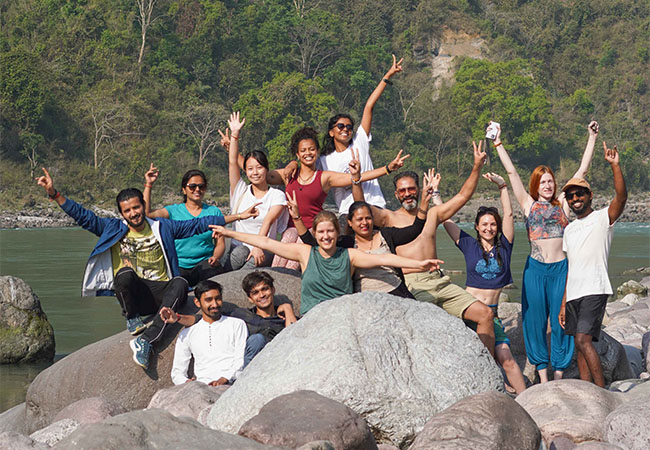
  • Become eligible to to join any 300 hour yoga teacher training program.
  • Become part of a group of committed yoga students and people with similar interests.

What does and doesn't the course fee include?

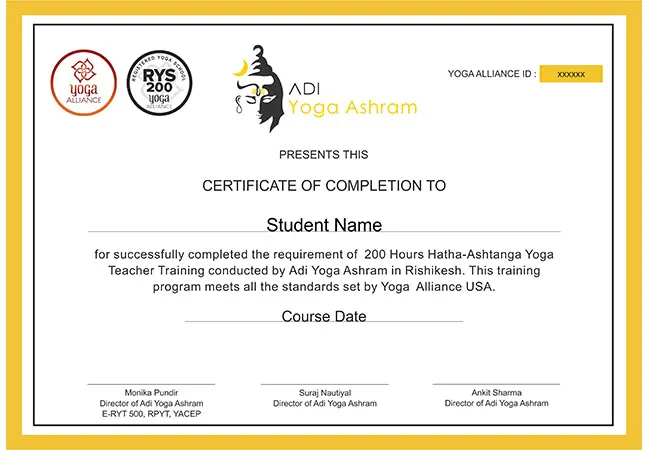
Sample Certificate

yoga-certification-in-india

Certification: RYT 200 (Yoga Alliance, USA)

Our 200 Hour Yoga Teacher Training Course in India has been fully recognized and accredited by Yoga Alliance USA as a Registered Yoga School (RYS 200). On successful completion of the course and examinations, students are automatically granted the qualification to register as an RYT 200 with Yoga Alliance USA. This world renowned qualification is valid in more than 160 countries and enables graduates to teach yoga professionally worldwide.

In addition to the qualification itself, the training is a transformational journey. Through regular practice, dedication, and self-inquiry students develop self-assurance, mindfulness, and authenticity in the practice and daily life. The teacher training is meant for educating future yoga teachers as well as helping students to become caring practitioners and persistent students of yoga.

200-Hour Yoga Alliance Logo Yoga Alliance Accreditation Logo
Our Yoga Alliance Profile →

Yoga Alliance ID: 388264

Eligibility & Requirements - 200 Hour YTT Course

This 200 Hour Yoga Teacher Training in Rishikesh welcomes all those with a desire to explore yoga in a more disciplined way. It is designed not only for those wishing to become yoga teachers but also for practitioners who wish to develop a deeper connection with the traditional yogic principles, routine, breath control, meditation, and self-discovery.

The training is open to beginners through to intermediate level students. You must have an open mind and be willing to learn and immerse yourself in the training. You do not need to be an experienced yoga teacher to join. The most important thing you will need is consistency and openness to the ancient style of learning in an school.

The training includes philosophy, self-study, group living, and students would need to be ready for a demanding daily schedule with a focus on personal development through yoga practice and study, and a break from the usual daily-life distractions. Those who would be a good fit are people ready to make space in their lives for this experience.

Since the daily schedule includes regular Asana practice, pranayama, meditation, and long study hours, we expect students to be in generally good physical and mental health before joining the course. The training may not be suitable for students with serious chronic medical conditions, major injuries, or health limitations that could affect their participation in the intensive daily program.

All classes and lectures will be performed in the English language. We advise having sufficient proficiency in English in order to understand instructions, engage in conversation, and grasp theoretical concepts throughout the course.

In order to ensure a serious and mature learning atmosphere, an individual should be at least 16 to enroll in the 200 Hour Yoga Teacher Training course in India.

Course Syllabus - 200 Hours Yoga Teacher Training

The curriculum at Adi Yoga Ashram is in complete accordance with International standards of Yoga Alliance, USA. Our senior teachers have developed this all-inclusive program that integrates the following core dimensions of yogic study:

Yoga Practice & Technique

Ashtanga-Vinyasa Primary Series

The primary series (Yoga Chikitsa) follows a specific order of poses to ensure that students warm up every part of the body and develop the strength and flexibility needed to progress to more challenging poses.

Surya Namaskar (Sun Salutations)

  • Surya Namaskar A (9 Vinyasas)
  • Surya Namaskar B (17 Vinyasas)
  • Breath and movement synchronization
  • Building internal heat and stamina

Standing Series

  • Foundation and structural alignment
  • Hip opening and spinal extension
  • Balance and concentration practices
  • Warrior and balancing postures

Seated Series

  • Forward folds and spinal flexibility
  • Twisting postures for detoxification
  • Hip-opening and seated balancing postures
  • Core strength and upper body stability

Finishing & Inversion Sequence

  • Introduction to traditional finishing postures
  • Shoulder stand and inversion awareness
  • Headstand preparation and balance
  • Nervous system relaxation and cooling down

Alignment & Adjustment

  • Introduction to the Tristhana Method
  • Ujjayi breath & Drishti
  • Safe alignment and posture modifications
  • Hands-on adjustment techniques
Hatha Yoga Asana

The Hatha Yoga module familiarizes students with the classical yogic method. Asana is viewed as a state of being steady and perceiving inwardly. The practice is based on one of the most ancient yogic systems. It works on purifying the physical body, balancing the solar (Pingala) and lunar (Ida) energies, developing an ever-increasing sensitivity to breath as a fundamental aspect of practice, and preparing the body-mind construct for spiritual growth.

Yogic Foundations

  • Introduction to the traditional principles of Hatha Yoga
  • Understanding breath, posture, and awareness in practice
  • Surya Namaskar (Sun Salutation)
  • Chandra Namaskar (Moon Salutation)
  • Prepratory practices from Pawanmuktasana Series

Asana Categories

  • Standing postures for grounding and stability (such as Trikonasana and Virabhadrasana)
  • Vajrasana group and kneeling practices (such as Ustrasana and Mandukasana)
  • Forward bending postures (such as Paschimottanasana and Janu Sirsasana)
  • Backward bending postures (such as Bhujangasana and Dhanurasana)
  • Twisting and spinal mobility practices (such as Ardha Matsyendrasana)
  • Hip-opening postures (such as Baddha Konasana and Upavistha Konasana)
  • Balancing postures and concentration training (such as Vrikshasana and Garudasana)
  • Introduction to inversions (such as Sarvangasana and Halasana)
  • Relaxation and restorative postures (such as Shavasana and Makarasana)

Sequencing & Practice Flow

  • Standing sequences
  • Sitting and supine sequences
  • Hip-opening and twisting sequences
  • Forward bending and backbend sequences
  • Understanding foundational sequencing principles
Yoga Cleansing- Kriyas for purification of body

Shatkarma are practices that help facilitate the removal of waste and toxins from the body. The benefits of these practices are said to include an improved sense of well-being, mental clarity, lightness of the body, increased energy flow, and enhanced breathing.

  • Introduction to the concept of Shatkarma
  • Theoratical understanding of purification practices
  • Benefits, safety precautions, and general practice guidelines
  • Jala Neti (nasal cleansing with saline water)
  • Sutra Neti (nasal cleansing with rubber catheter)
  • Sutra Neti (nasal cleansing with rubber catheter)
  • Vaman Dhauti / Kunjal Kriya (stomach cleansing practice)

Subtle Body & Energy Practices

Mantra Chanting & Sacred Sound Practices

Chanting mantras is a fundamental element of yoga that incorporates sounds, frequencies, and repetitions to focus the mind, achieve mental peace, and develop spiritual awakening. Students are taught how to recite, when to recite, and the impact of reciting common mantras from ancient Vedic texts.

  • Introduction to mantra chanting and sound vibration
  • Correct pronunciation and breath coordination
  • Traditional opening and peace mantras
  • Patanjali Invocation Mantra
  • Gayatri Mantra
  • Maha Mrityunjaya Mantra
  • Aum Namah Shivaya
  • Food prayer and gratitude mantra (Aum Brahmarpanam)
  • Universal peace and wellbeing mantras
Pranayama & Breath Awareness Practices

Pranayama is an ancient practice developed by yogis to regulate life energy, also known as prana, throughout the body. These breathing techniques help create a deeper connection between the breath and the mind, preparing the practitioner for meditation and inner awareness.

Foundations of Pranayama

  • Historical understanding of pranayama
  • Introduction to prana and the pranic body
  • Five major pranas and energetic functions
  • Nadis: Ida, Pingala, and Sushumna
  • Four aspects of pranayama practice

Breath Anatomy & Nervous System

  • Basic anatomy of the respiratory system
  • Diaphragm function and breathing mechanics
  • Understanding the nasal cycle
  • Sympathetic and parasympathetic nervous system
  • Breath and nervous system regulation

Breathing Awareness Practices

  • Abdominal (diaphragmatic) breathing
  • Thoracic breathing
  • Clavicular breathing
  • Full yogic breathing

Traditional Pranayama Techniques

  • Surya Bhedana & Chandra Bhedana
  • Nadi Shodhana (alternate nostril breathing)
  • Ujjayi Pranayama
  • Kapalbhati cleansing breath
  • Bhastrika Pranayama
  • Sheetali & Sheetkari Pranayama
  • Bhramari Pranayama

Practice Challenges & Teaching Methodology

  • Stress and breathing patterns
  • Role of exhalation and relaxation
  • Common breathing difficulties
  • Common issues faced by students
  • Teaching progression and sequencing
  • Voice modulation and class guidance
Meditation (Dhyana)

Meditation in yoga implies moving from endless mental fluctuations to inner quietness and mindfulness. Using techniques of meditation, practitioners are taught to watch their thoughts, control their breathing, focus on the present, and over time, heighten their self-awareness that is independent of thoughts and feelings.

Foundations of Meditation
  • Introduction to meditation and inner awareness
  • Brief Origin and historical understanding of meditation
  • Meditation within the Eight Limbs of Yoga
  • Do’s and don’ts of meditation practice
  • Grounding and emotional balance
  • Ajapa Meditation
  • Yoga Nidra
  • Trataka Meditation
  • Silence Practice
  • Antar Maun (Inner Silemce Meditation)
  • Meditation Pose
Meditation Postures, Mudras & Drishti
  • Traditional meditation sitting postures
  • Chin Mudra, Gyan Mudra, Yoni Mudra, and Dhyan Mudra
  • Shambhavi Mudra and Nasikagra Drishti
  • Meditation Pose
Meditation Techniques
  • Breath awareness meditation
  • AUM chanting meditation
  • Japa & Ajapa meditation
  • Walking meditationn
  • Drawing meditationn
  • Dynamic meditation practices
  • Trataka (candle gazing meditation)
  • Yoga Nidra and guided relaxation
  • Body scan and 31-point awareness practice
  • Yog Nidra
  • Mindfulness and observational awareness practices
Relaxation Concepts & Discussion
  • Shavasana and prone relaxation position
  • 1:2 calming breath for stress and panic regulation
  • Barefoot grounding and nature awareness
  • Salt bath and energetic cleansing concepts

Human Science & Biomechanics

Yoga Anatomy, Physiology

The anatomy part of the course is designed to give you a functional understanding of how your body moves, breathes, stabilizes, and responds in a yoga setting. We use modern anatomical concepts and merge them with yogic practice to enhance alignment awareness, movement efficiency, posture, and injury prevention.

Foundations of Human Anatomy
  • Anatomical planes and directional movements
  • Types of joints and joint mobility
  • Fundamental anatomical movements in yoga
  • Relationship between muscles, posture, and movement
  • Understanding posture and body alignment in yoga practice
Skeletal System & Structural Alignment
  • Structure and function of the spine
  • Natural curves and deformities of the spine
  • Pelvic alignment and stability
  • Knee structure and movement mechanics
  • Tendons, ligaments, and connective tissues
Muscular System & Functional Anatomy
  • Introduction to major muscle groups used in yoga
  • Shoulder and upper back muscles
  • Arm muscles
  • Chest and abdominal muscles
  • Hip flexors and pelvic muscles
Physiology & Internal Systems
  • Respiratory system and breath mechanics
  • Nervous system and stress response
  • Digestive and circulatory systems
  • Endocrine system and hormonal balance
  • Introduction to chakras and energetic body awareness
Applied Yoga Anatomy
  • Alignment awareness in yoga postures
  • Understanding muscle engagement and stretching
  • Stability, mobility, and balance in asana practice
  • Injury prevention and safe movement principles

Yoga Humanities & Philosophy

Yoga Philosophy & Yogic Lifestyle

Yoga philosophy provides the spiritual and intellectual foundation of yogic practice. Students are introduced to the essential teachings of Sanatana Dharma, classical yogic texts, and the traditional paths of yoga that guide self-discipline, inner growth, and conscious living.

Foundations of Yogic Philosophy
  • Introduction to Sanatana Dharma and yogic traditions
  • Overview of important scriptures of Sanatana Dharma
  • Definition of yoga according to Yoga Sutras and Bhagavad Gita
  • Understanding the purpose and goal of yoga
Yogic Life & Human Development
  • The four stages of life (Ashramas)
  • Brahmacharya
  • Grihastha
  • Vanaprastha
  • Sannyasa
  • The four Purusharthas
  • Dharma
  • Artha
  • Kama
  • Moksha
Traditional Paths of Yoga
  • Introduction to the major paths of yoga
  • Karma Yoga – the path of action
  • Jnana Yoga – the path of wisdom and self-inquiry
  • Bhakti Yoga – the path of devotion
  • Raja Yoga – the path of meditation and mental discipline
  • Hatha Yoga – balancing body and pranic energies
  • Mantra Yoga – the science of sound and vibration
Raja Yoga & Eight Limbs
  • Introduction to Raja Yoga philosophy
  • Study and discussion of the Eight Limbs of Yoga
  • Ethical foundations and yogic discipline

Assessment Criteria for 200 Hour Yoga Teacher Training Program

Students are evaluated regularly during the course using written and practical tests to give them an indication of their progress and help to build their confidence in their personal practice and teaching.

Hands-on assessments like teaching of asanas, understanding of alignment, pranayama, and how a class is conducted are there. Besides, students are also motivated to participate in discussions, group activities, practice every day during the training.

Assessment aims to not merely measure how much a trainee knows, but to facilitate their progression into a self-assured, accountable, and suitably equipped yoga teacher.

Assessments Are Based On:

  • • Written examinations
  • • Practical teaching performance
  • • Attendance and punctuality
  • • Professional behavior and discipline

Why Adi Yoga Ashram for Your 200-Hour YTT?

At Adi Yoga Ashram, we have created an environment and atmosphere that is not only conducive for personal growth but also recognizes the importance of the overall development. Every aspect of this school, from the food, halls, rooms, green surrounding to the traditional teachings, is designed specifically with this in mind. Thats what makes your journey unique with us.

Experienced Teachers with Traditional Teaching

You will be learning from experienced yoga teachers whose teaching will not only help you understand the practice better, but will also help you grow as a confident teacher. Each subject has its own specialised teacher so students can receive focused guidance and develop a deeper understanding of yoga.

Small Group Learning Experience

Small class sizes help students receive better attention and guidance according to their individual pace and understanding level.

Integrated Campus

Everything students need during the training is located within the same building, including yoga halls, accommodation rooms, and dining space, allowing comfortable movement between classes, meals, and breaks.

Supplementary Yoga and Healing Sessions

Along with the core 200 Hour Yoga Teacher Training curriculum, students also get the opportunity to experience additional sessions such as Yin Yoga, Aerial Yoga, Sound Healing, Kirtan, and other traditional yogic practices.

Sattvic-Rajsik Vegetarian Meals

Simple vegetarian meals are prepared to support yogic practice and daily training throughout the course. Students also occasionally experience traditional Indian meals prepared with authentic Indian spices and flavours to help them stay nourished, balanced, and energised during the training.

Comfortable Accommodation

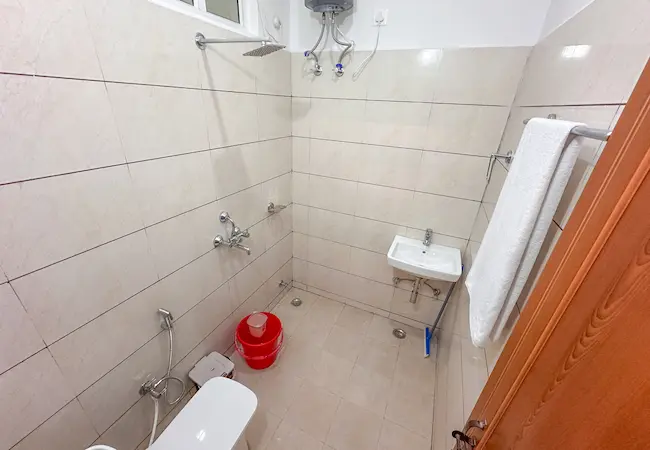
Students stay in clean and comfortable rooms with attached washrooms, storage space, Wi-Fi connectivity, and a peaceful environment suitable for rest and study.

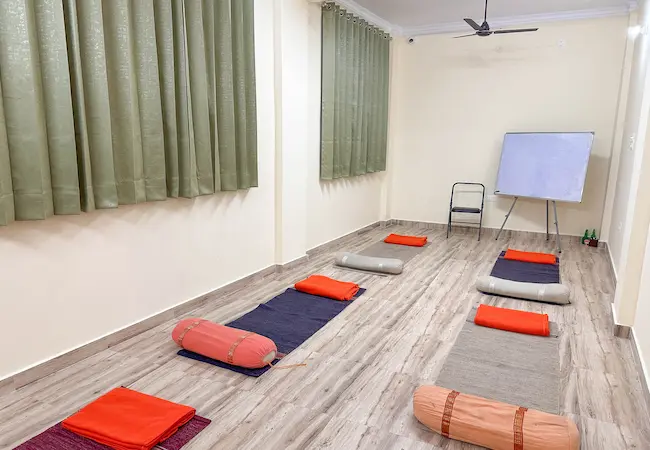
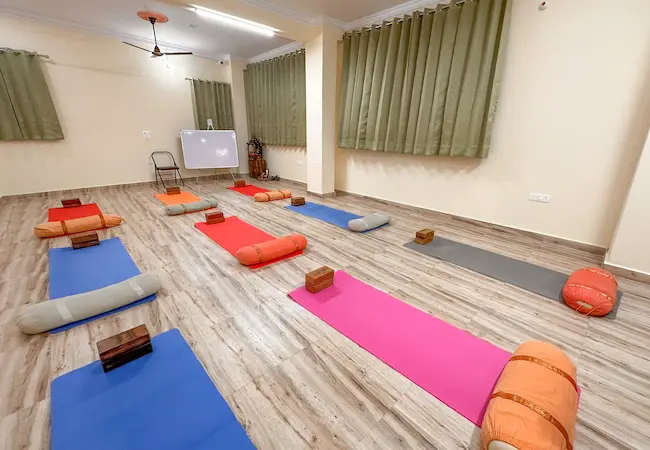
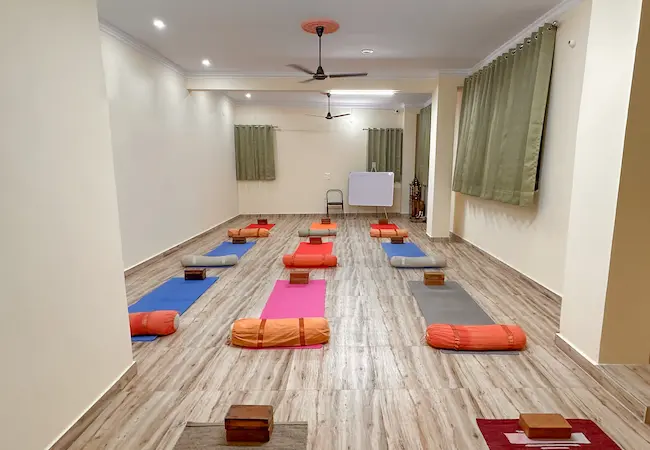
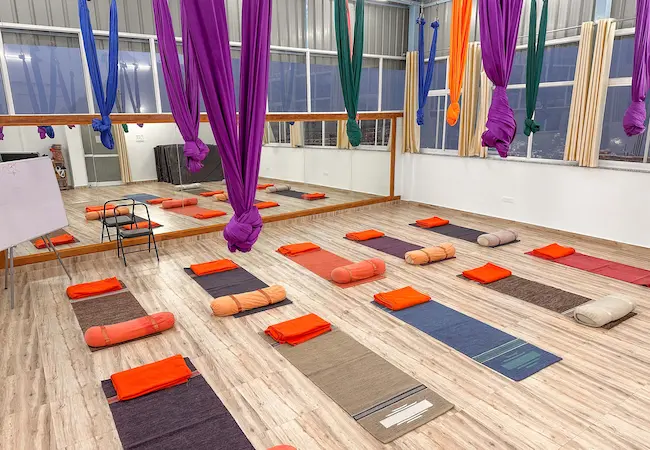
Spacious and Air-Conditioned Yoga Halls

Large yoga halls equipped with air conditioning and ceiling fans create a comfortable environment for Hatha, Ashtanga-Vinyasa, Meditation, and Pranayama practices during all seasons and long training hours.

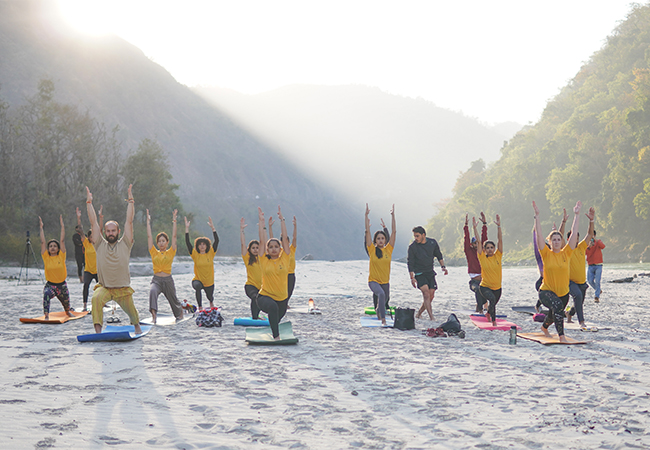
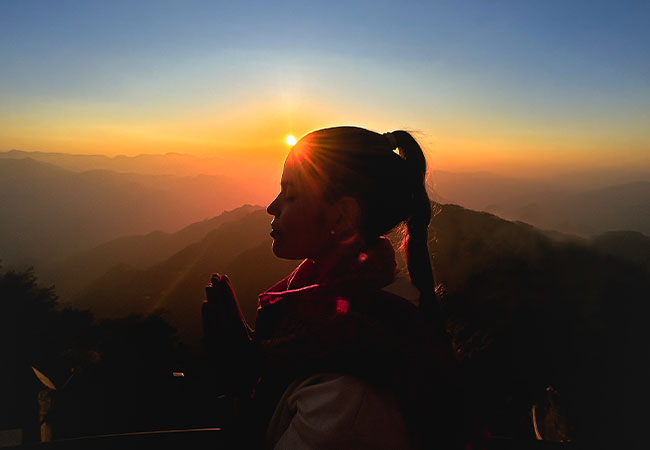
Sunrise View from the Yoga Hall

Morning classes take place in the natural light of the rising sun and peaceful Himalayan surroundings, creating a calm and uplifting atmosphere for daily pranayama and meditation practice.

Fully Equipped Practice Props

Yoga mats, blocks, bolsters, cushions, straps, and chairs are available to support alignment, restorative work, flexibility training, and beginner-friendly modifications.

Clean and Maintained Practice Environment

The Ashram regularly cleans and maintains yoga mats, cotton bolster covers, cushions, and shared practice props to support a hygienic and comfortable learning environment.

Student Accommodation & Facilities in Rishikesh

We understand that for effective learning rest is an important aspect of your Yoga Teacher Training course. And accommodation in the school is designed to provide students with a comfortable and peaceful environment throughout the training.

During your stay you will get clean rooms with attached washrooms, a private or shared storage space, Wi-Fi connectivity, and a calm atmosphere. It helps students rest, study, and recharge comfortably between daily intensive yoga sessions and classes. Since the training schedule is long, proper rest and good sleep become an important part of maintaining overall health and well-being during the course.

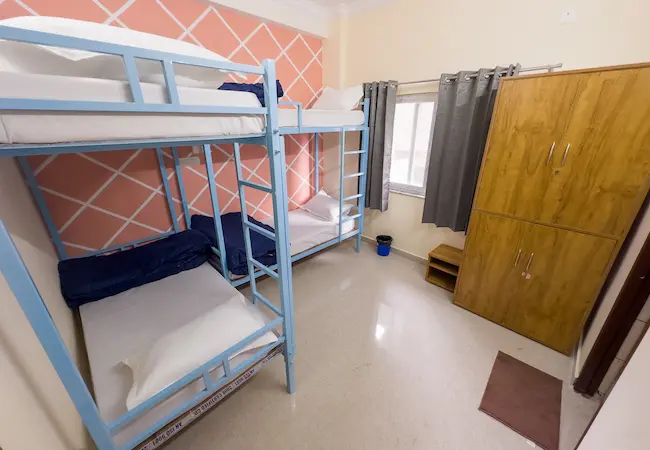
  • Room Size: 11 × 11 ft to 12 × 12 ft (≈ 12–13 m²)
  • Bathroom: Attached, 3 × 6 ft to 5 × 6 ft with (electric water heater), western toilet, and standard shower fittings.
  • Beds: Private (6 x 6 ft) ,Twin Shared (2 × single 6 × 3 ft); Dorm (2 Bunk beds 6 x 3 ft) foam mattresses medium firmness, polyester fiberfill Pillow medium firmness
  • Storage: One Cupboard/Room (6′10″ × 3′) shared by students

*Layouts may vary slightly between rooms in the same category.

Facilities/Amenities

  • 3 AC Yoga Studios
  • In-Room AC (Chargeable)
  • Free Wi-Fi ~40–60 Mbps
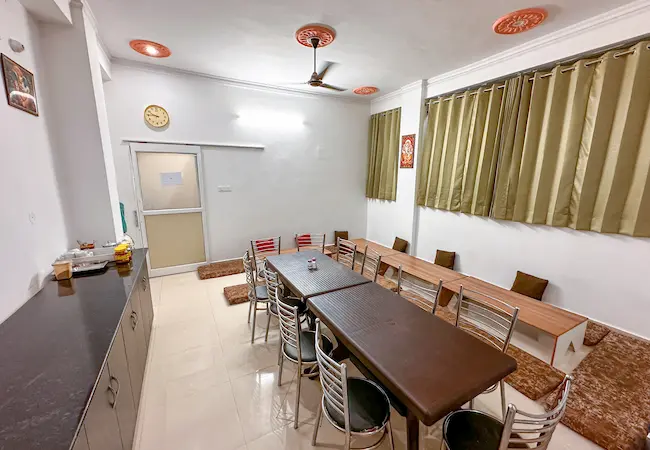
  • Dining Area
  • Shared Student Fridge (Dining Area)
  • Terrace
  • Purified Drinking Water (Hot, Cold & Normal)
  • Nearby Laundry Facilities (5-min walk)
  • Attached Bathroom
  • Electric Geyser
  • Shower
  • Study Desk and Chair
  • Storage Cupboard
  • Linen Change Every 3rd Day
  • Weekly Housekeeping

Meals

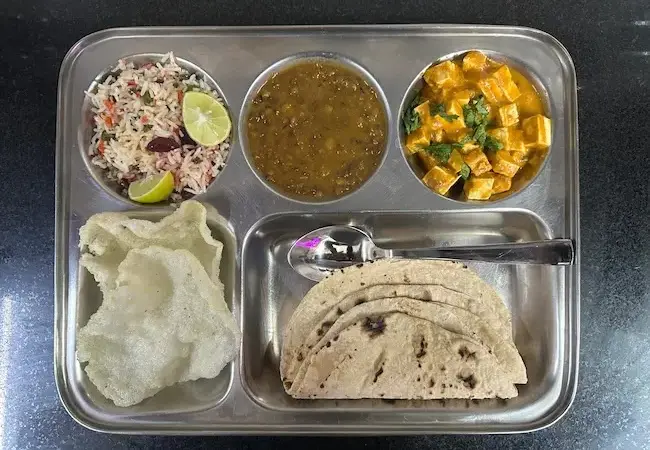
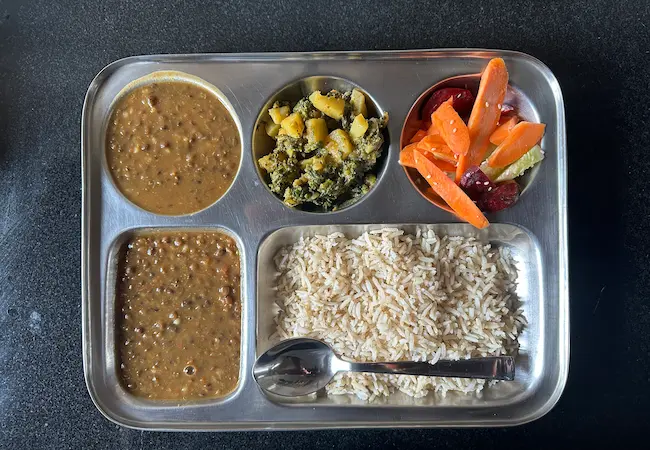
Good nutrition is essential to fuel and recover from yoga sessions and for the enhancement of yoga skills. The diet plan at Adi Yoga Ashram is a Sattvic + Rajsik diet which includes vegetarian meals, whole grains, fresh fruits, and more.

Common meals consist of lentils, rice, chapati, vegetables, fruits, herbal tea, and authentic Indian food cooked with real Indian spices and products. The idea is to serve healthy meals that can sustain long hours of practice as well as let students taste the diversity of real Indian food.

Special Dietary Needs: We can accommodate Vegan and Gluten-Free requests with prior notice. To ensure we can meet your safety and nutritional needs, please read our Full Dietary & Allergy Policy here.

  • Breakfast: includes oats, fruits, sprouts and dishes like poha, idli, or dosa, rolls etc.
  • Lunch: offers rice with lentils, seasonal vegetables, and salad.
  • Dinner: is light and comforting with soup , Chapati & Rice, lentils, Occasional sweets, herbal tea, and seasonal vegetables.
  • Highlight: No onion, no garlic, Prepared with minimal oil, Balanced with protein, carbs, and micronutrients

Excursion Included In This Course

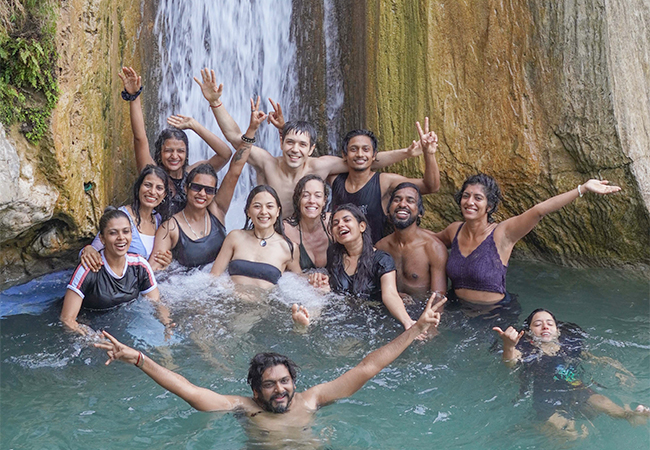
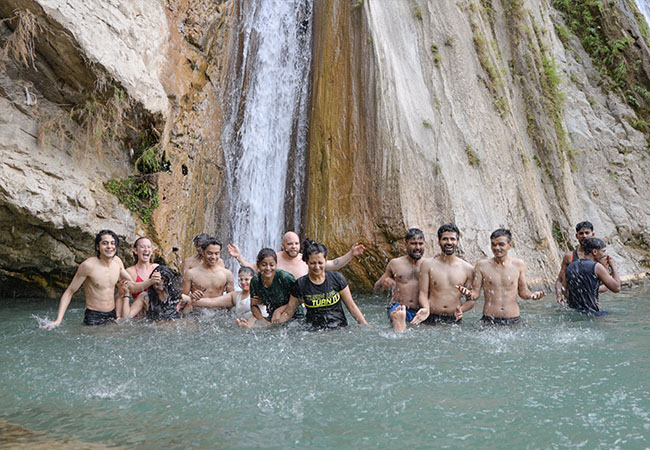
Everyone needs a break in order to relax and recharge their batteries. So, to facilitate that, we organize sightseeing trips every Sunday to some of the most beautiful and exhilarating places in and around Rishikesh. These sites include the Kunjapuri Temples, with its panoramic Himalayan views, the sublime waterfalls, the peaceful beaches by the river, the bathing the holy Vashishta Cave, and many more. Breakfast is provided on these days whereas you can enjoy lunch and dinner at some of the nearby local restaurants on your own.

" योगः ज्ञानं प्रकाशकम् "

"Yoga is knowledge that illuminates"


Amritabindu Upanishad

Course Dates - 200 Hours Hatha Ashtanga Yoga Program

Note:- Please note that during major Indian holidays, including Diwali, Holi, and Raksha Bandhan, classes will be paused and will not follow the regular schedule. To accommodate these breaks, the course graduation date may be extended by one day.

Discount Offers: Take advantage of our offers! These discounts are designed to support your yoga journey and make your training more accessible. Please read the guidelines carefully to understand how and when each offer can be applied.

🎁 Early Bird

Book 20 days before & get 5% off your total fee (Everymonth for First 5 bookings).

🎁 Enroll Together (Friends Discount)

Sign up together with a friend and you both receive 8% off.

🎁 Birthday Month Discount

If your course falls in your birthday month, enjoy additional 2% off as our gift to you!.

🎁 Group Discount

Enroll as a group of 4 or more and get 10% off per person.

Answers of Most asked QUESTIONS

Frequent Asked Questions

Answer: Absolutely! A 200-hour YTT is designed to take you from where you are, both in knowledge and physical ability and help you grow from there. The only thing that is required when entering a YTT of any level is the desire to learn and commitment to the practice. You will be amazed at how quickly your body will adapt and your strength and flexibility will improve when you practice regularly.

Having a 200-hour certification is the basic requirement for being able to obtain liability insurance and apply for teaching positions at yoga studios, gyms, and wellness retreats around the world. Throughout the course, you will receive real-world teaching practice to help you graduate with greater confidence and practical experience. At the same time, consistent self-practice, continued learning, and personal experience remain essential parts of becoming a skilled teacher. While this certification is the minimum qualification required to begin teaching (unless you are already an experienced teacher), the yoga field is highly competitive, so confidence and teaching experience become extremely important and develop gradually through regular practice and continued learning.

Our curriculum fulfills the designated educational categories requirements set by Yoga Alliance USA. Upon successful graduation, you will receive a certificate that allows you to easily register yourself as a Registered Yoga Teacher (RYT-200).

Our core curriculum is primarily devoted to teaching Hatha and Ashtanga-Vinyasa. Once you've learned these two foundational classical systems, you’ll have the exact architectural blueprint necessary to feel confident teaching asana classes.

To pack for a yoga teacher training program, you should pack plenty of comfortable clothing for yoga practice as well as some normal clothes appropriate for the location and time of year. Also, bring your yoga mat,Bathing towels, as well as any hygiene products you'll need. In addition, pack a reusable water bottle, as well as some slippers and a pair of shoes. If you require medication, be sure to pack enough for your trip, and remember to take any other personal items you can't live without.

Read more Faq's