Yin Yoga Teacher Training in Rishikesh, India

Course Highlights

$199

Tuition Only (Excludes Food & Accommodation)

  • 9 Days Program
  • Certification-YACEP
  • Study Material Included

$249

Quad Shared Dorm

  • 9 Days Program
  • Certification-RPYS
  • Study Material Included
  • 3 Yogic Meals

$349

Twin Shared Room

  • 9 Days Program
  • Certification-RPYS
  • Study Material Included
  • 3 Yogic Meals

$449

Private Room

  • 9 Days Program
  • Certification-RPYS
  • Study Material Included
  • 3 Yogic Meals

There is a certain peace that can be only found in the foothills of the Himalayas, and especially in Rishikesh, the world’s yoga capital. Located in this spiritual city, we work as a place that shares traditional yogic wisdom. Adi Yoga Ashram is a place where people come from all around the world to put down their burdens of life and begin an inner transformation journey through yogic practices. Among the many other things we offer, the Yin Yoga Teacher Training stands out as a unique program for deep, introspective study of body and mind. It is a quite unique program, unlike any of our other programs. We would like you to take a moment to look at what makes this training program with us in Rishikesh so special and to get to know the practice of Yin Yoga itself.

In contrast to the more dynamic and active styles you might have practiced in your day-to-day life, Yin yoga becomes an introspective practice. With long, passive poses, it targets the connective tissues known as the fascial networks of the body. The goal of this practice is to put your mind in a meditative headspace and let go of tension. In our demanding lives, we rarely have the chance to slow down and find that balance, but in the stillness of a Yin session, you can access something deeper in the body and mind than you have ever experienced before.

While other forms of yoga may be more dynamic and they certainly makes you feel good after the session, here you are asked to stay in the posture for three to five minutes at a time, and as you progress sometimes you hold it for even more. It is this kind of stillness and stability that gives you access to the body’s fascial plane, ligaments, and tendons. When you perform the postures you place a mild strain on these tissues, which helps them to regenerate and improves the mobility of your joints. At the same time, it opens up your meridian pathways, allowing Qi to travel freely through the body.

If you are interested in learning about this practice, we at Adi Yoga Ashram have a very thorough Yin Teacher Training program available for you. Whether you are just an enthusiast or a teacher who wants to teach Yin Yoga, this course is for you. Under the guidance of experienced teachers, you will graduate with a firm grasp of all the related subjects, including Yin philosophy, meridian anatomy, Yin breathing, meditation, and more. You can expect to get into the finer details of body anatomy and see for yourself what long-held postures do to the fascial tissue.

At our Yoga Teacher Training Center, we always advocate small batches to promote student-teacher interactions and enhance the learning experience.

To truly understand this practice, we have designed the schedule to build a flow of classes, which balances physical practice with the theoretical subject knowledge you need to teach. You will be up early, in time with the quiet of the morning. The first class of the day is a Yin yoga Asana session, where you can experience the stillness and fascial plane we talked about earlier in a practical way. This class is immediately followed by pranayama and yin breathing work, where you learn to let yourself go. Meditation session includes a rotating focus on meditation techniques, Yoga Nidra, and a special session of sound healing as well. By the time you sit down for morning breakfast, your mind will be settled, and your body will be fully prepared for the day ahead.

The middle of the day shifts from your practice classes to the theory sessions, where teachers cover the mechanics behind all the practices. On follwing classes, you will learn the Body Meridian theory to map out the subtle energy channels and learn how they connect to physical health according to Classical Chinese Philosophical & Medical Traditions. You will then move to the Yin alignment- adjustment class, where you will learn how to enter and exit from different Yin poses safely. And after lunch and a short break, you will cover the Yin Philosophy class, grounding your practical skills in traditional wisdom.

The late afternoon is all about learning how to share this practice with others. In our sequencing classes, you will study how to piece together a safe, and effective Yin classes. To keep your energy balanced, we follow this class with a dynamic shift into Yang practices including  Aerial yoga or ashtanga vinyasa yoga, which gives your body a chance to move actively after hours of quiet study. We finish our structured day with a communal dinner, leaving plenty of time to rest before lights out.

Yin Yoga Teacher Training Certification

The Yin Yoga Teacher Training certification is for yoga practitioners and teachers who wish to deepen their knowledge or wants to be a certified Yin Yoga Teacher. Upon successful completion of this course, students will receive a Yin Yoga Teacher Training Certificate from Adi Yoga Ashram, acknowledging their training and practical competency in the subjects.

The program is also eligible for Yoga Alliance Continuing Education (YACEP) hours, which allow registered yoga teachers to apply the training toward their continuing education requirements. This certification can be a valuable addition for teachers looking to expand their teaching skills and offer Yin Yoga classes within their existing yoga programs.

Note:- The course is open to anyone interested in learning Yin Yoga. However, students who wish to register the training as continuing education with Yoga Alliance should hold a minimum 200-Hour Yoga Teacher Training certification from register yoga school. This requirement applies only to Yoga Alliance registration and does not affect anyones participation in the course.

logo-200-yoga-alliance
logo-yoga-alliance

What does and doesn't the course fee include?

Sample Certificate

Sample Certificate

What Makes Our Yin Yoga Training Unique?

We believe a great training should offer more than just basic theory and standard stretching. At Adi Yoga Ashram, our program bridges traditional Indian yogic wisdom with Classical Chinese Medicine, giving you a deep, dual-lineage understanding of both Prana and Qi.

Adi Yoga Ashram

Complete Props & Setup

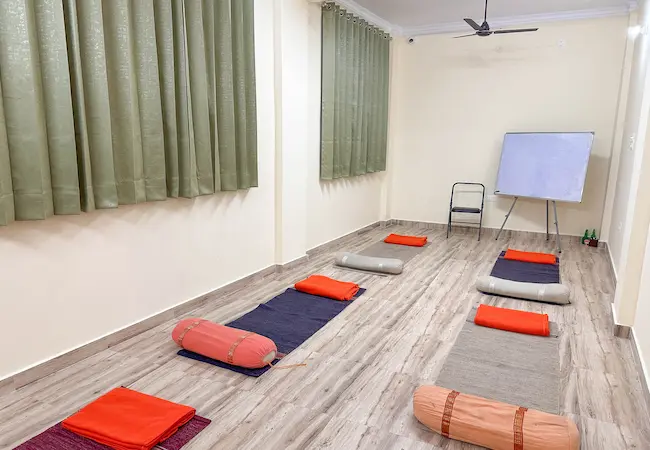
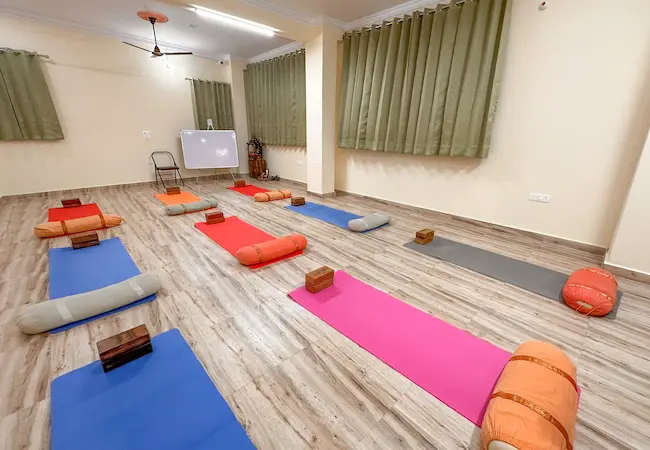
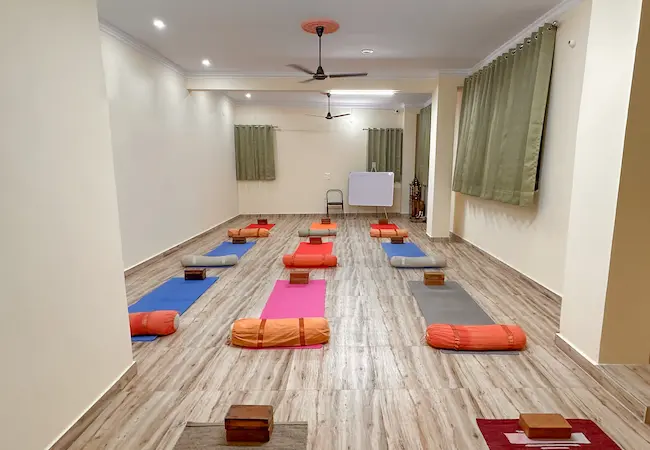
  • Because Yin postures are held for long time, proper physical support is essential to prevent pain and ensure a therapeutic experience. Our yoga halls are fully equipped with cotton bolsters, blocks, straps, and blankets. Every student gets unlimited access to a complete set of props, allowing you to fully customize each posture to match your flexiblity or skeletal structure.

Functional Anatomy

  • During this program, we prioritise how a posture feels to a student over how it looks. Our teachers will not force you into a picture-perfect alignment. Instead, they will teach you functional anatomy of body, and how to adapt each pose to fit an individual's unique bone structure and safely target specific fascial lines.

Yin & Yang Balance

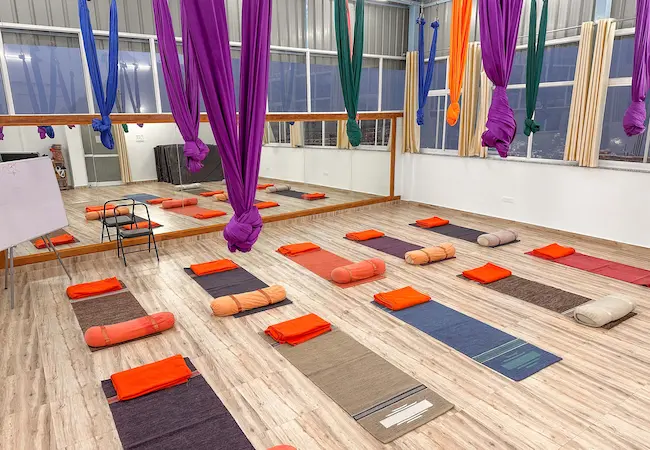
  • While the yin yoga core focus is passive stability, after a lot of classes, the body starts to feel stagnant, so to tackle that issue, we uniquely added active Yang practices such as Aerial Yoga and Ashtanga Vinyasa into the late afternoon classes. This ensures that the body has a chance to move and improve blood circulation and remain in a balanced state after hours of passive practices.

Two Ancient Traditions

  • Our yin yoga teacher training syllabus combines traditional Indian yogic knowledge with Classical Chinese Medicine in a balanced way. You will be surprised to learn how Chinese Meridian Theory, Qi flow, and organ health are similar to Indian practices like Pranayama and meditation and ayurveda.

Sound Healing & Yoga Nidra

  • Inner transformation requires a complete release of the nervous system. During this program our approach is holistic, which is why we have integrated dedicated sessions of Sound Healing and Yoga Nidra directly into your daily schedule. Pairing deep tissue release with these practices allows you to guide the mind out of stress and into deep rest.

Assessment & Eligibility for Yin Yoga TTC

Students who already hold a 200 Hour Yoga Teacher Training certification may choose to use this training as continuing education and integrate Yin Yoga into their professional teaching. However, the course is also open to yoga practitioners who wish to deepen their personal understanding of Yin Yoga, meditation, meridian theory, and mindful movement. No advanced level of flexibility is required, although an openness to stillness, self-inquiry, and regular practice is recommended.

On the last day of the training, students participate in a practical assessment where they demonstrate their understanding of Yin postures, functional alignment principles, use of props, class sequencing, and teaching skills. The purpose of the assessment is not only to evaluate knowledge but also to help students refine their confidence and prepare them to safely guide Yin Yoga classes.

Assessments Are Based On:

  • • Professional behavior and discipline
  • • Attendance and punctuality
  • • Practical teaching performance

Course Syllabus - 85 Hours Yin Yoga Program

Our 85 Hour Yin Yoga Teacher Training focuses on the core pillars of Yin Yoga, including Yin Asana, Yin Philosophy, Yin Breathing, Meditation, Meridian Theory, Teaching Methodology, and Functional Alignment. Throughout the program, students develop a deeper understanding of Yin Yoga through the principles of Yin and Yang, Taoist philosophy, energetic awareness, and mindful movement.

Yin Yoga Practice & Technique

Introduction to Yin Yoga Asana

In this class students learn how to practice Yin Yoga postures according to the fundamental principles of Yin Yoga. The practice primarily consists of seated, supine, and passive postures held for extended periods of time, allowing the body to gradually release tension and access deeper connective tissues.

  • Melting Heart Pose
  • Ankle Stretch Pose
  • Banana Pose
  • Half Butterfly Pose
  • Butterfly Pose
  • Camel Pose
  • Cat Pulling its Tail Pose
  • Child’s Pose
  • Dangling Pose
  • Deer Pose
  • Dragon Pose
  • Frog Pose
  • Happy Baby Pose
  • Reclining Spinal Twist Pose
  • Saddle Pose
  • Shoelace Pose
  • Snail Pose
  • Sphinx Pose
  • Seal Pose
  • Square Pose
  • Squat Pose
  • Straddle Pose
Yin Yoga philosophy

Yin Philosophy class explores the theoretical foundations that shape modern Yin Yoga practice. Students are introduced to key concepts drawn from Taoist philosophy, including Yin and Yang, balance, natural cycles, and the relationship between stillness and movement.

Yin-Yang

  • Meaning and purpose of Yin Yoga
  • History and development of Yin Yoga
  • Understanding Yin and Yang theory
  • Taoist philosophy and the concept of Tao
  • Concept of Qi/Chi
  • Yin organs and meridian theory
  • Yin Yoga and its Element
  • Physical and energetic aspects
Body meridians & Marma

Meridian Theory introduces students to the energetic pathways described in Traditional Chinese Medicine (TCM) and their relationship to Yin Yoga practice. Students learn the location, function, and qualities of the primary meridians, along with their associated organs and emotional patterns.

Meridian

  • Introduction to Meridian Theory
  • 5 Elements of Yin
  • Meridian Clock
  • Lung Meridian
  • Large Intestine Meridian
  • Stomach Meridian
  • Spleen Meridian
  • Heart Meridian
  • Small Intestine Meridian
  • Urinary Bladder Meridian
  • Kidney Meridian
  • Pericardium Meridian
  • Triple Burner (San Jiao) Meridian
  • Gallbladder Meridian
  • Liver Meridian
  • Yin and Yang Meridian Relationships

Marma

  • Introduction to Marma Therapy and Marma Points
  • Relationship between Marma Points, meridians, and acupressure
  • Benefits of Marma stimulation for physical and energetic balance
  • Practical identification and application of arm Marma Points
Yin Alignment

Yin Alignment class explores how to practice and teach Yin Yoga postures safely and effectively while respecting individual anatomical differences. Students learn the principles of functional alignment, the appropriate use of props, modifications for different body types, and how to distinguish between beneficial sensation and discomfort.

Safe Practice Principles

  • Joint safety and contraindications
  • Use of props for support and accessibility
  • Modifications for different body types
  • Compression vs Tension

Posture catagory

  • Hip-opening postures (Butterfly, Deer)
  • Forward bending postures (Dangling, Straddle)
  • Twisting postures(Cat Pulling Its Tail)
  • Lateral stretch postures(Banana Pose)
  • Backbend Postures (Sphinx, Seal)
  • Restorative & Rebound Postures(Child's Pose, Happy Baby)
Yin Sequencing

Yin Sequencing teaches students how to organize Yin Yoga postures into safe, balanced, and purposeful classes. Students learn how to sequence postures according to anatomical targets, themes, meridian pathways, and the overall intention of a practice.

Sequencing Approaches

  • Meridian-based sequencing
  • Element-based sequencing
  • Target-area sequencing

Practical Class Design

  • Creating beginner Yin Yoga classes
  • themed Yin Yoga classes

Traditional Yoga Practices

Yang practice

Yang Yoga refers to more active styles of practice that develop strength, circulation and mobility. Throughout the training, students will experience different Yang-based classes, which may include Hatha Yoga, Ashtanga-Vinyasa Yoga and Aerial Yoga.

Meditation (Dhyana)

In meditation class, students learn a variety of slow, calming, and mindfulness-based meditation techniques that complement the passive nature of Yin Yoga. The practices are designed to provide relaxation, inner awareness, emotional balance, and nervous system regulation.

  • History and meditative roots of Yin Yoga
  • Traditional and Yin meditation approaches
  • Humming meditation
  • So-Hum meditation
  • Walking meditation
  • Mudra meditation
  • 31-point guided meditation
  • 61-point guided meditation
  • Chakra fascia mapping meditation
  • Yoga Nidra visualization practice I
  • Yoga Nidra visualization practice II
Pranayama

In this class, students learn gentle breathing practices that complement the slow and reflective nature of Yin Yoga. Focus is placed on breath awareness, relaxation, nervous system regulation, and the relationship between breath, fascia, and energetic balance.

  • Introduction to Yin Breathing and its modern origins
  • Yin Breathing compared to traditional Pranayama
  • Breath, nervous system regulation, and vagal tone
  • Fundamental principles of Yin Breathing
  • Dantian awareness and diaphragmatic breathing
  • Anterior, posterior, and lateral breathing patterns
  • Understanding Qi and energetic awareness
  • Relationship between breath, fascia, and meridian pathways
  • Breath direction within Yin Yoga postures
  • Integrating Yin Breathing into Yin Yoga practice

Glimps From Yin Yoga Asanas

Accommodation & Premises

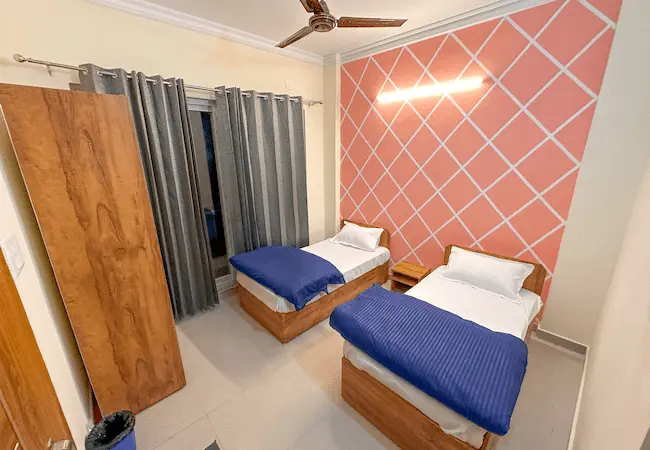
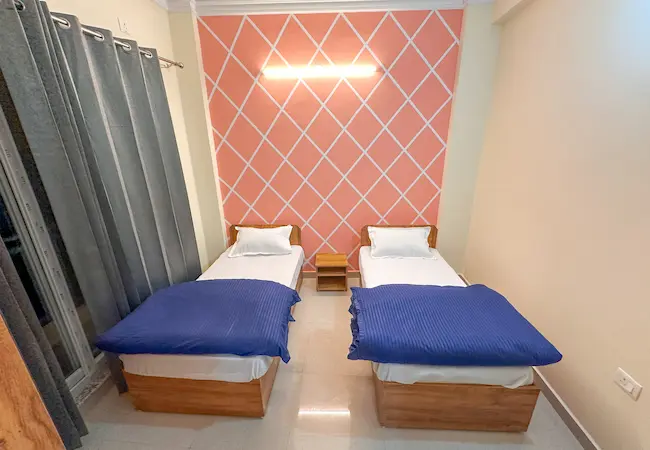
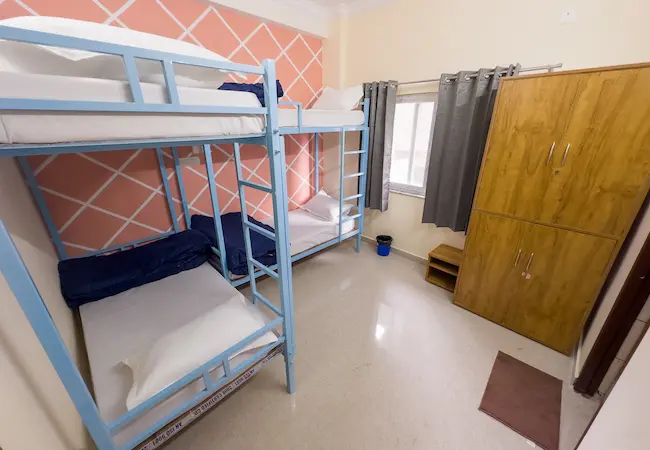
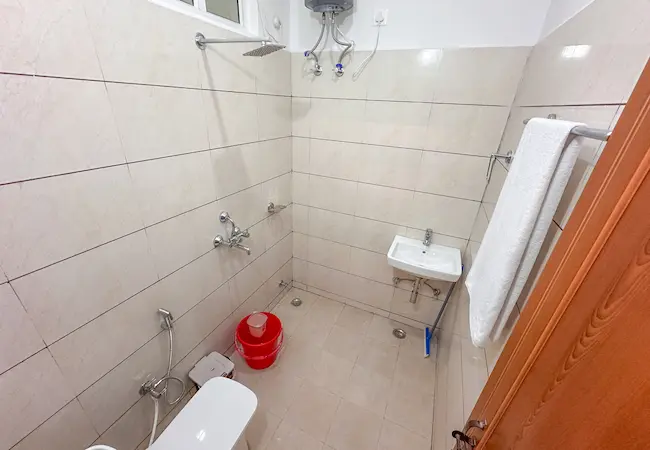
Clean and comfortable accommodation comprises of single private rooms and double shared & Dorm rooms with attached washrooms.

  • Room Size: 11 × 11 ft to 12 × 12 ft (≈ 12–13 m²)
  • Bathroom: Attached, 3 × 6 ft to 5 × 6 ft with (electric water heater), western toilet, and standard shower fittings.
  • Beds: Private (6 x 6 ft) ,Twin Shared (2 × single 6 × 3 ft); Dorm (2 Bunk beds 6 x 3) foam mattresses medium firmness, polyester fiberfill Pillow medium firmness
  • Storage: One Cupboard/Room (6′10″ × 3″) shared by students
  • Amenities: Ceiling fan / A C (as available), Wi-Fi ~40–60 Mbps, desk,housekeeping weekly,linen change every 3rd day

*Layouts may vary slightly between rooms in the same category.

Facilities/Amenities

  • 3 AC Yoga Studios
  • Free Wi-Fi ~40–60 Mbps
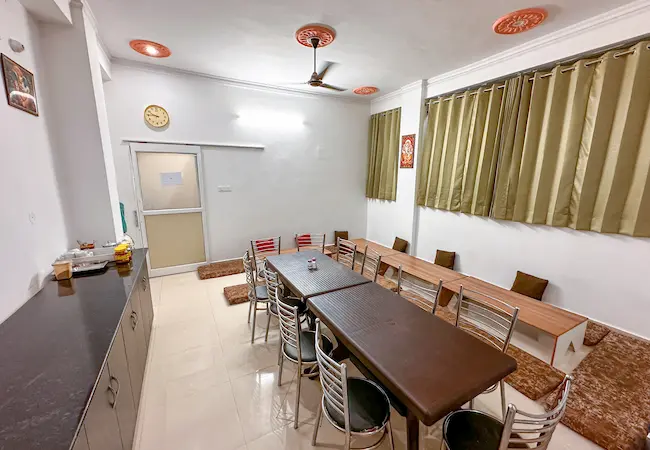
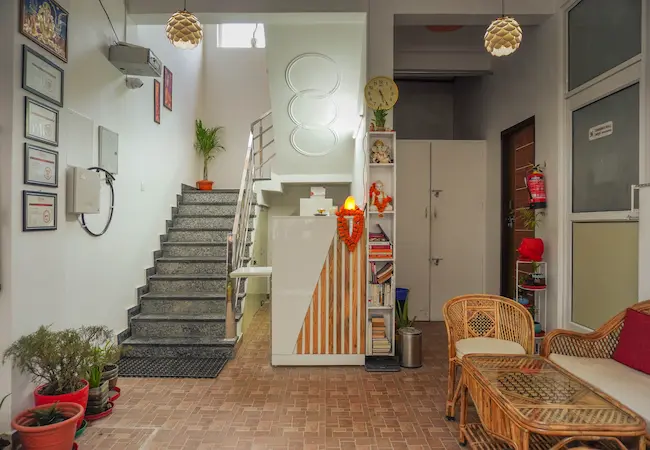
  • Dining Area
  • Terrace
  • Shared Student Fridge (Dining Area)
  • Purified Drinking Water (Hot, Cold & Normal)
  • Nearby Laundry Facilities (5-min walk)
  • In-Room AC (Chargeable)
  • Attached Bathroom
  • Electric Geyser
  • Shower
  • Storage Cupboard
  • Study Desk and Chair
  • Linen Change Every 3rd Day
  • Weekly Housekeeping

Meals

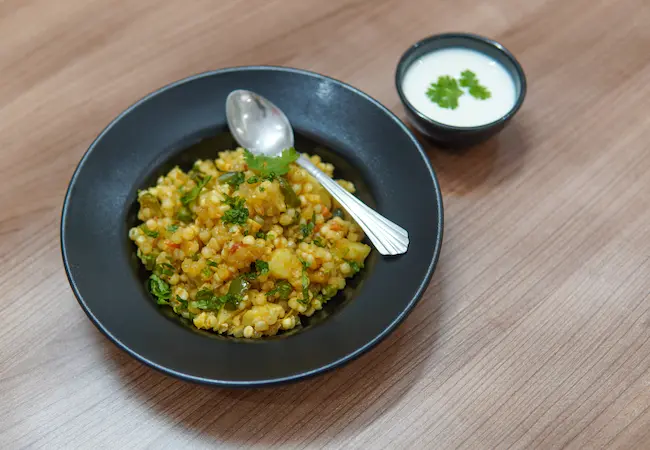
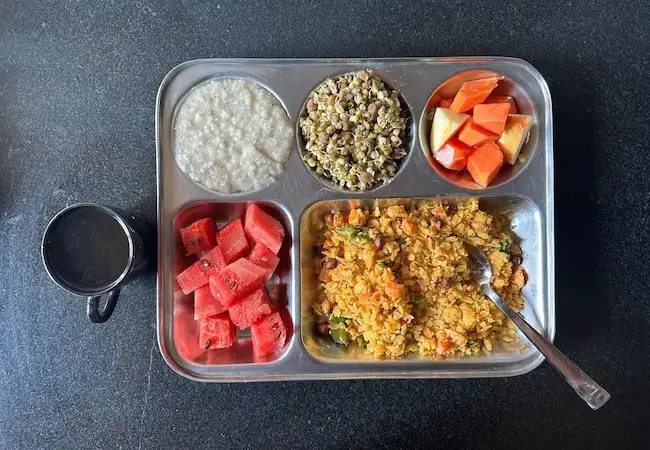
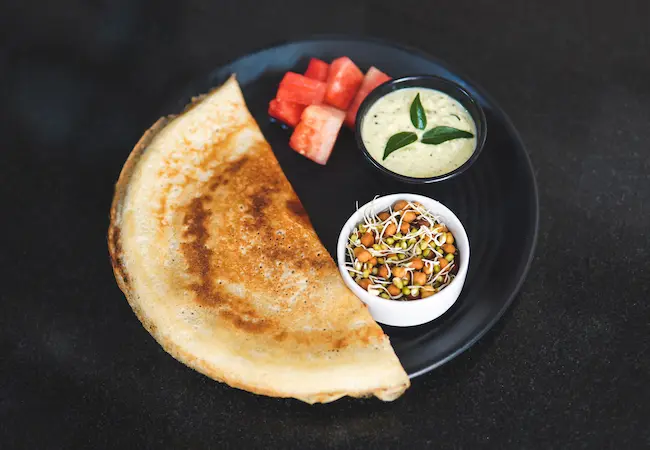
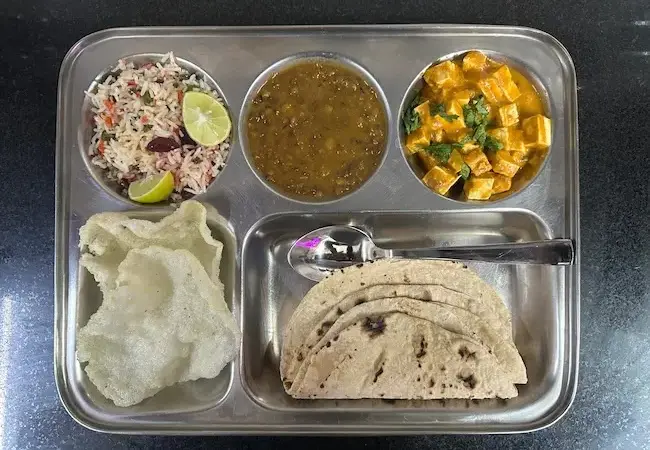
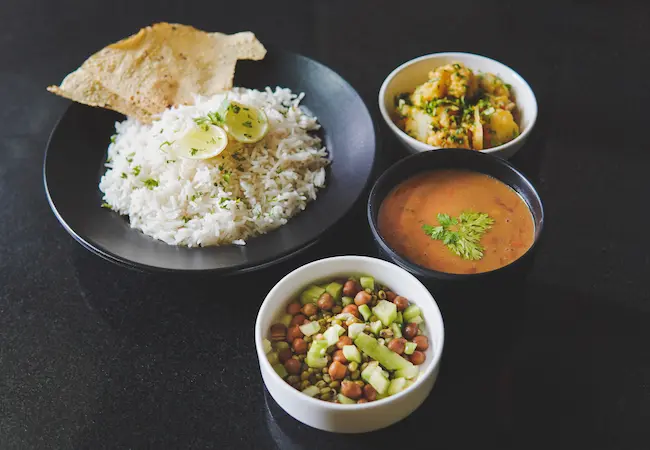
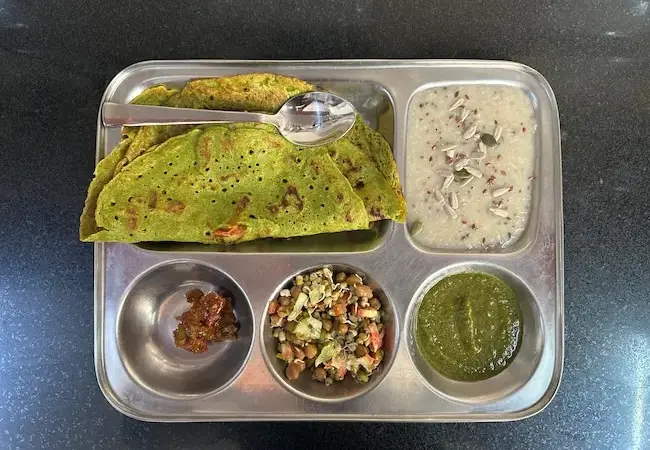
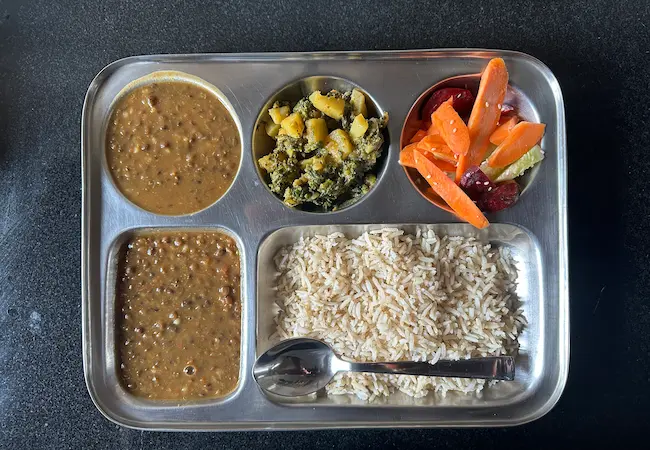
The gentle and introspective nature of Yin Yoga is best supported by nourishing and balanced meals. During the training, proper nutrition plays an important role in maintaining energy levels, supporting recovery, and helping students remain comfortable during long periods of practice, meditation, and study. At Adi Yoga Ashram, we provided our students a balanced vegetarian diet to support their physical and mental wellbeing. Our daily Meals include a variety of lentils, rice, chapati, seasonal vegetables and fresh fruits, and morning herbal teas.

Special Dietary Needs: We can accommodate Vegan and Gluten-Free requests with prior notice. To ensure we can meet your safety and nutritional needs, please read our Full Dietary & Allergy Policy here.

  • Breakfast: includes oats, fruits, sprouts and dishes like poha, idli, or dosa, rolls etc.
  • Lunch: offers rice with lentils, seasonal vegetables, and salad.
  • Dinner: is light and comforting with soup , Chapati & Rice, lentils, Occasional sweets, herbal tea, and seasonal vegetables.
  • Highlight: No onion, no garlic, Prepared with minimal oil, Balanced with protein, carbs, and micronutrients

सर्वं ज्ञानं मयि विद्यते

"All that I have to learn is already within me"


Sanskrit Proverb

Course Dates - 85 Hours Yin Yoga Program (9 Days)

Classes will start on 24th and will end of 31st/1st of the Month

Note:- During major holidays in India, such as Diwali, Holi, and Raksha Bandhan, please note that classes will not be conducted as per the regular schedule. Additionally, it is important to be aware that the graduation date for the course may be extended by a day to accommodate these holiday breaks.

Discount Offers: Take advantage of our offers! These discounts are designed to support your yoga journey and make your training more accessible. Please read the guidelines carefully to understand how and when each offer can be applied.

🎁 Early Bird

Book 20 days before & get 5% off your total fee (Everymonth for First 5 bookings).

🎁 Enroll Together (Friends Discount)

Sign up together with a friend and you both receive 8% off.

🎁 Birthday Month Discount

If your course falls in your birthday month, enjoy additional 2% off as our gift to you!.

🎁 Group Discount

Enroll as a group of 4 or more and get 10% off per person.

Answers of Most asked QUESTIONS

Frequent Asked Questions

Yes, Yin Yoga program is open for beginners as well because it involves zero standing poses, balancing acts, or complex transitions so it makes it perfect for everyone. But one thing is challenging, that is holding a the postures for long time, which can be mentaly challenging for few . So to tackle that issue, during the program our teachers focuses on a functional approach over a rigid alignment, meaning we teach you how to use a full set of props, like blocks, blankets, and bolsters to safely customize every posture to fit your individual bone structure from day one.

Traditional yoga styles such as Ashtanga-vinyasa focuses on movement, muscular effort more and it also generate internal body heat. Yin Yoga, on the other hand, is a completely passive, cooling, and slow-paced practice. Instead of working the muscles, you hold postures passively for three to five minutes to access deeper connective tissues, such as the fascial plane, ligaments, and joints.

The practice of Yin Yoga bridges Indian yogic traditions with Classical Chinese Medicine perfectly. According to these ancient philosophies, long-held passive postures apply a healthy, mild strain to the deep fascial lines of the body. AND these lines matches perfectly along the body’s meridian pathways metioned in TCM. And when you hold, the postures for long pereiod of time, you clear stagnant tension and open up blocked channels which and allow the life-force energy Qi to flow freely in the body.

A lot of our students join the training program purely as to deepen their own practice or for personal knowledge or sometime even to relax. The short program acts as a personal retreat for a lot of people. But if in near future you do decide to teach later, our thorough curriculum equips you with the safety, sequencing, and anatomical skills required to guide others professionally anywhere in the world.

Yes it does. As we age or live a sedentary lifestyle (which most of us do), our connective tissues and fascial networks start to lose their elasticity naturally and it leads to tight joints and stiffness over a period of time. While the active yoga stretches muscles, muscles cannot change the joint spaces. On the other hand yin yoga safely loads weight into the deep, passive tissues of our body. This slow, sustained pressure stimulates tissue regeneration, lubricates the joints, and relax deep tension in the fascia, giving you a good overall mobility.

Read more Faq's